How to Manufacture a New Product: Process, Examples & Best Options
Key Takeaways
Successful product manufacturing requires a systematic 6-step approach starting with design and prototyping and ending with production scaling.
Different manufacturing locations (in-house, domestic, offshore) offer distinct advantages depending on your product complexity, budget, and time constraints.
Quality control systems must be implemented at every stage of manufacturing to ensure consistent product standards and customer satisfaction.
Rabbit Product Design runs a structured end-to-end development process that takes products from feasibility, production-ready prototyping, manufacturing setup, and launch.
Turn Your Product Idea Into Reality: The Manufacturing Journey
The journey from concept to finished product follows a roadmap that successful product creators have refined over decades. While each product has unique challenges, understanding the fundamental stages helps you navigate complexities with confidence. The process isn't always linear; you'll likely revisit earlier stages as you refine your concept and respond to manufacturing realities.
This article walks you through the six essential stages of product manufacturing, from initial design and prototyping through materials sourcing, process selection, finding the right manufacturing partner, quality control, and production scaling.
Whether you're a first-time inventor or a startup preparing to scale, you'll find practical guidance on making the right manufacturing decisions at every stage of development.
How to Manufacture a New Product: 6 Essential Steps

There are six essential stages that every product must go through, spanning from the initial concept and design to the final manufacturing process and delivery.
While product manufacturing processes vary by industry and complexity, most successful launches follow six critical steps. Each stage builds upon the previous one, creating a foundation for efficient, high-quality production that meets your market needs and business goals.
Design and Prototype Development: Everything begins with design; the blueprint that guides all manufacturing decisions. Start with sketches that capture your core concept, then move to CAD designs to visualize and refine your product before investing in physical prototypes. Your design must balance functionality, aesthetics, and manufacturability. From there, prototyping brings your design to physical reality through methods such as 3D printing, CNC machining, or handcrafted models.
Materials Selection and Sourcing: Materials selection directly impacts product durability, functionality, aesthetics, and cost. Identify materials that meet your performance requirements while staying within budget, considering factors like strength-to-weight ratio, weather resistance, electrical properties, and sustainability. Material selection often involves tradeoffs. Higher-quality materials cost more but may reduce warranty issues and improve customer satisfaction.
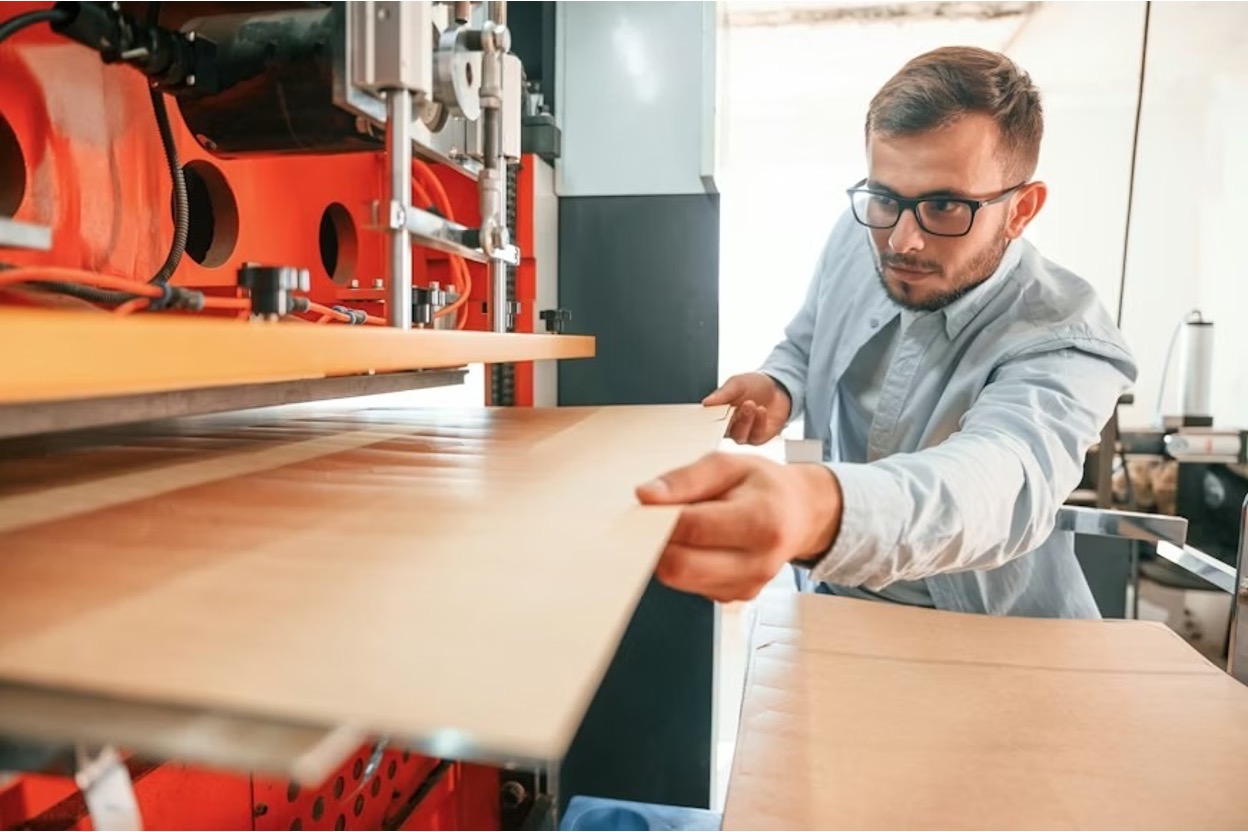
Manufacturing Process Selection: Selecting the right manufacturing process is critical to product quality, cost, and scalability. Common methods include injection molding (ideal for high-volume plastic parts), CNC machining (precision metal and plastic components), sheet metal fabrication (enclosures and structural components), 3D printing (prototypes and low-volume production), and die casting (high-volume metal parts). Consider how production volume affects your choice. Low-volume runs benefit from processes with minimal tooling costs, while high-volume production requires methods optimized for speed and efficiency.
Finding the Right Manufacturing Partner: Your manufacturing partner can make or break your product launch. Define your requirements clearly: production volume, quality standards, lead times, and budget, then research candidates through industry associations, trade shows, online platforms, and referrals. Look beyond quoted prices: assess technical capabilities, quality certifications (e.g., ISO 9001), communication processes, and financial stability.
Quality Control Implementation: Quality control isn't a final inspection; it's a comprehensive system spanning your entire manufacturing process. Define clear quality standards based on customer expectations, industry benchmarks, and regulatory requirements, and document them in detailed specifications that cover dimensions, materials, appearance, functionality, and testing procedures. Implement inspection protocols at critical stages: incoming materials inspection, in-process checks, and final product testing.
Scaling Production: Once you've validated your manufacturing process with initial runs, scaling requires systematic evaluation of every production element. Start with realistic targets based on market demand forecasts and cash flow constraints. Many successful products begin with limited runs to test market response before committing to large-scale investment. Identify potential bottlenecks and address them before they limit growth, whether through additional tooling, automating manual processes, or qualifying backup suppliers.
Real Examples: Products That Got Manufacturing Right
The Instant Pot Revolution
The Instant Pot's manufacturing success demonstrates the power of incremental improvement and of integrating customer feedback. Creator Robert Wang invested roughly $300,000 of personal savings and launched the first Instant Pot on Amazon in 2010, manufactured in China.
Rather than attempting to scale immediately, Wang implemented a deliberate strategy that prioritized product development and customer support over advertising, critical for a pressure cooker where safety issues from poor manufacturing could be severe.
Each production generation incorporated technological improvements driven by customer feedback. Wang personally read tens of thousands of Amazon reviews and introduced updated models every 12 to 18 months. This measured approach allowed the company to maintain quality standards while scaling from around 10,000 units in 2012 to hundreds of thousands sold in single-day events by 2016.
The company also developed rigorous quality control protocols, including multiple safety features per unit, over 100 in the latest model, that proved crucial for building consumer trust.
How GoPro Scaled Manufacturing
GoPro's manufacturing journey illustrates its evolution from a prototype to a global production powerhouse. Founder Nick Woodman began by working with a Chinese manufacturer, Hotax, to produce a simple wrist-mounted 35mm film camera incorporating his custom strap design, slight housing modifications, and the GoPro branding, and then selling through surf shops and specialty retailers.
As demand grew, GoPro partnered with specialized electronics contract manufacturers across Asia and Mexico, developing sophisticated quality control systems to ensure their cameras could withstand extreme environmental conditions.
The company owns its own production equipment, while partners provide manufacturing facilities; an arrangement that enables durable, cost-effective production. During development and quality validation, GoPro subjects its cameras to rigorous testing that simulates real-world usage conditions, including water immersion, temperature extremes, and drop testing.
This emphasis on manufacturing quality became a key competitive advantage in a market where reliability under extreme conditions was paramount.
Manufacturing Options: Pros & Cons
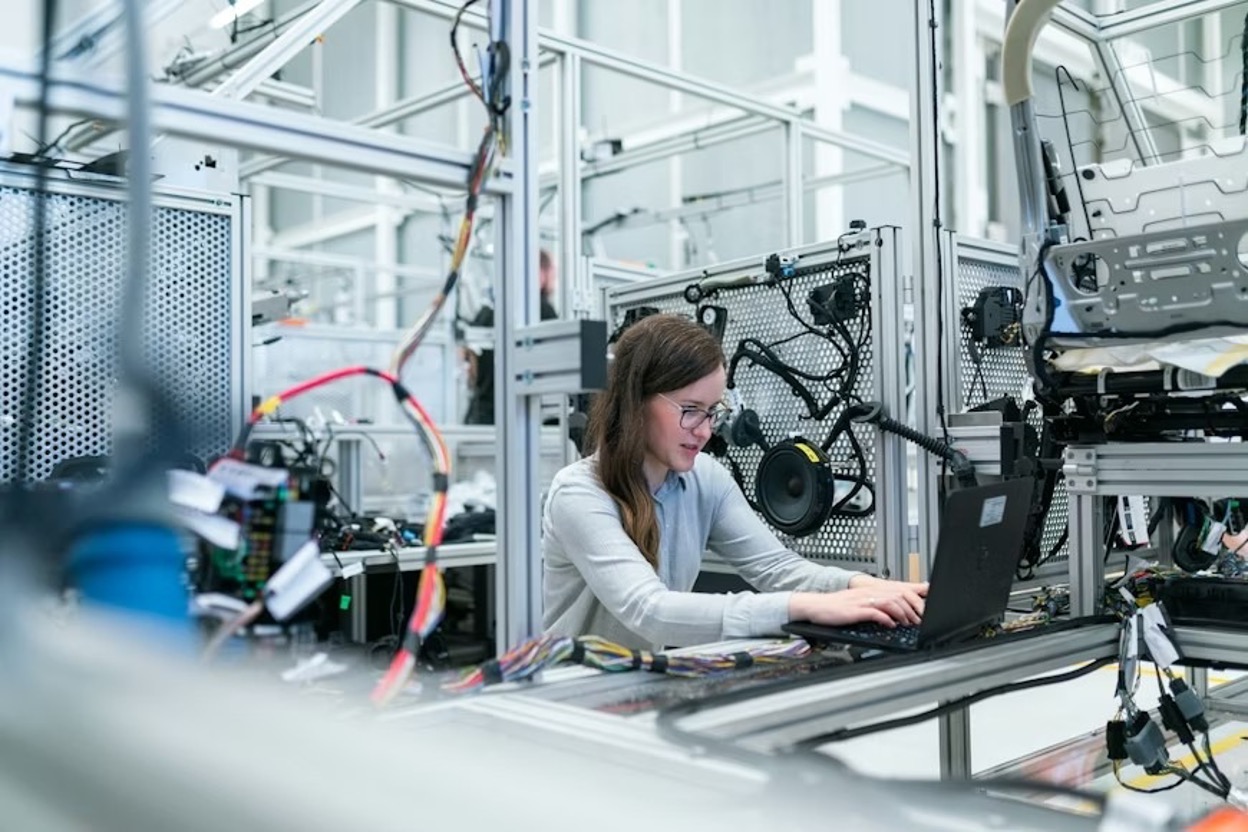
Choosing where to manufacture your product involves complex tradeoffs. Each option offers distinct advantages and challenges that must be evaluated against your specific product requirements, budget constraints, and market positioning.
In-House Manufacturing
Manufacturing in-house gives you maximum control over production quality, intellectual property, and process improvements. You'll have direct oversight of every production step and can make immediate adjustments as needed.
This approach works well for products with proprietary technology, complex assembly requirements, or frequently changing specifications. In-house manufacturing also eliminates communication barriers and reduces lead times for product iterations.
However, building in-house manufacturing capacity requires substantial capital investment in equipment, facilities, and skilled labor. These fixed costs can be difficult to justify for seasonal or uncertain-demand products.
You'll also need to develop manufacturing expertise that might fall outside your core business competencies. Most companies start with contract manufacturing and only bring production in-house when volumes justify the investment.
Domestic Contract Manufacturing
Domestic manufacturing offers a balance of quality control, intellectual property protection, and logistical simplicity. Working with manufacturers in your home country typically means shared language, business culture, and legal systems, reducing communication barriers and contract enforcement challenges.
Shorter shipping distances mean faster delivery times, lower freight costs, and more responsive supply chains, particularly important for customized or time-sensitive products. The primary drawback is cost, as labor, regulatory compliance, and overhead expenses typically make domestic manufacturing more expensive than offshore options. However, this gap is narrowing as automation reduces labor costs and shipping costs increase.
Many companies find that domestic manufacturing's advantages in quality consistency, faster market response, and simplified logistics offset higher unit costs, particularly for premium products where quality perceptions matter.
Offshore Manufacturing
Offshore manufacturing can dramatically reduce production costs through lower labor rates, relaxed regulations, and economies of scale. Countries like China, Vietnam, Mexico, and India offer established manufacturing infrastructure for almost every product category.
These cost advantages can be substantial, sometimes reducing production costs by 40%–60% compared to domestic options. For price-sensitive products competing in mass markets, these savings may be essential to profitability.
However, offshore manufacturing introduces significant challenges in quality control, communication, intellectual property protection, and logistics. Language barriers and time zone differences complicate daily operations. Longer supply chains increase inventory requirements and reduce flexibility. Shipping delays, customs clearance, and import duties add complexity and cost.
Successful offshore manufacturing requires meticulous planning, clear specifications, and reliable local representatives to monitor production and resolve issues.
Hybrid Approaches
Many companies implement hybrid manufacturing strategies that combine multiple approaches. You might manufacture complex components domestically while sourcing standardized parts from offshore suppliers. Or you could start with domestic manufacturing for early production runs, then transition to offshore production as volumes increase and processes stabilize.
Some companies maintain dual-source manufacturing, producing in multiple locations to reduce supply chain risks and serve different geographic markets more efficiently.
The optimal approach often evolves as your product matures. Early-stage products benefit from the control and flexibility of domestic production, while established products with stable designs and predictable demand can leverage offshore cost advantages. Regularly reassess your manufacturing strategy as volumes change, technologies evolve, and global manufacturing conditions shift.
How Rabbit Product Design Takes Your Product From Idea to Manufacturing
Manufacturing a new product successfully means getting every step right, from initial design through materials, prototyping, partner selection, quality control, and production scaling. Most products don't fail because the idea was bad. They fail because the process between concept and factory floor wasn't structured to catch problems early, when they're cheap to fix.
At Rabbit Product Design, we've built our entire development system around that reality. Our structured process covers feasibility, concept development, industrial design, engineering, production-ready prototyping, manufacturing setup, branding, and launch planning. Every stage is designed to move your product closer to manufacturing, not just closer to a prototype that looks good on a shelf.
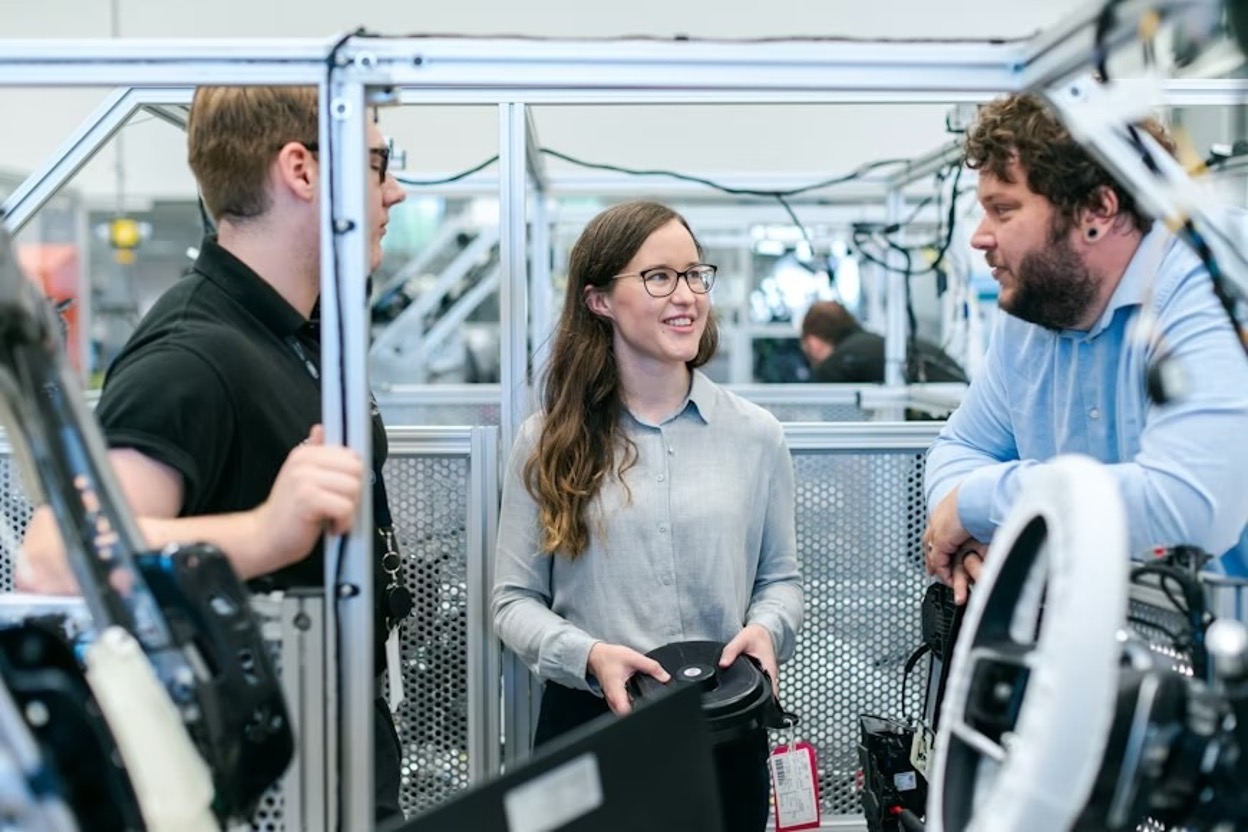
We build prototypes using production materials and real manufacturing methods because that's the only way to know if your design will actually work at scale.
We don't sell ideas, chase licensing deals, or treat patents as the finish line. We believe the only reliable way to make money with a product is to build it, manufacture it, and sell it as a business. Our senior team, averaging 27+ years of experience, works with inventors, startups, and established companies to make that happen.
Schedule a free consultation to start your manufacturing journey the right way.
Frequently Asked Questions (FAQs)
What's the difference between a prototype and a production-ready product?
A prototype demonstrates function and appearance but usually isn't made with production processes or final materials. Moving to production requires design-for-manufacturing optimization, refining geometry, standardizing components, simplifying assembly, and selecting materials that work with high-volume processes.
This transition is where many products fail, especially when early prototypes were built with methods like 3D printing that don't reflect real manufacturing constraints.
How long does it take to go from product idea to manufactured goods?
Simple products with standard components typically take 3–6 months. Consumer electronics with moderate complexity run 6–12 months, and medical devices requiring regulatory approval can take 2–5 years.
The biggest delays usually occur during design refinement and tooling development, not actual production. Building 25%–50% buffer time into your schedule is essential for handling the unexpected issues that arise in nearly every manufacturing program.
Do I need a patent before I start manufacturing?
The most practical safeguards when working with external partners are non-disclosure agreements (NDAs), limiting how much design detail you share at each stage, and splitting component production across suppliers where possible.
A provisional patent application is one option some founders consider, but patents are expensive, slow to process, and rarely lead to commercial success on their own. The only reliable path to protecting and profiting from your product idea is to build it, manufacture it, and get it to market as a real business.
How does Rabbit Product Design help with manufacturing a new product?
Rabbit Product Design runs a complete development process that covers feasibility, concept development, industrial design, engineering, prototyping, manufacturing setup, branding, and launch planning.
Unlike firms that hand off a design and wish you luck, we build prototypes with production materials and methods, validate manufacturability before tooling, and support factory sourcing, DFM/DFX review, and quality assurance, so the product that reaches your customer is the product you intended to build.
*Disclaimer: This content is for educational purposes only and not financial, legal, or business advice. Figures vary by circumstance. Consult qualified professionals before making decisions. For personalized guidance, contact Rabbit Product Design.