Production-Ready Prototype Development: Meaning, Examples & How It Works
Key Takeaways
A production-ready prototype is the final stage before full manufacturing, featuring complete functionality, materials, and manufacturing processes that will be used in the final product.
The journey from concept to production-ready prototype typically follows four validation stages: proof of principle, engineering validation (EVT), design validation (DVT), and production validation (PVT).
Production-ready prototypes must adhere to specific engineering tolerances, quality standards, and regulatory requirements that conceptual prototypes do not.
Innovators that invest in thorough prototype development, such as Dyson, achieve higher product success rates and fewer costly post-launch revisions.
Rabbit Product Design builds all prototypes using production-grade materials and machined parts rather than 3D prints, ensuring that what you test accurately reflects what will come off the production line.
What Is a Production-Ready Prototype Development?
A production-ready prototype development represents the final validation stage before full manufacturing begins. Unlike early conceptual prototypes that demonstrate basic functionality or design aesthetics, a production-ready prototype uses the exact materials, components, and manufacturing processes that will be used in mass production.
Every dimension must be precisely specified, every assembly method must be documented, and every quality standard must be validated. In essence, a production-ready prototype should be indistinguishable from the first units that will eventually roll off your production line.
Understanding what makes a prototype truly production-ready and following a systematic development process to get there sets products that succeed in the market apart from those that struggle with quality issues, cost overruns, and disappointed customers.
How the Production-Ready Prototype Development Process Works
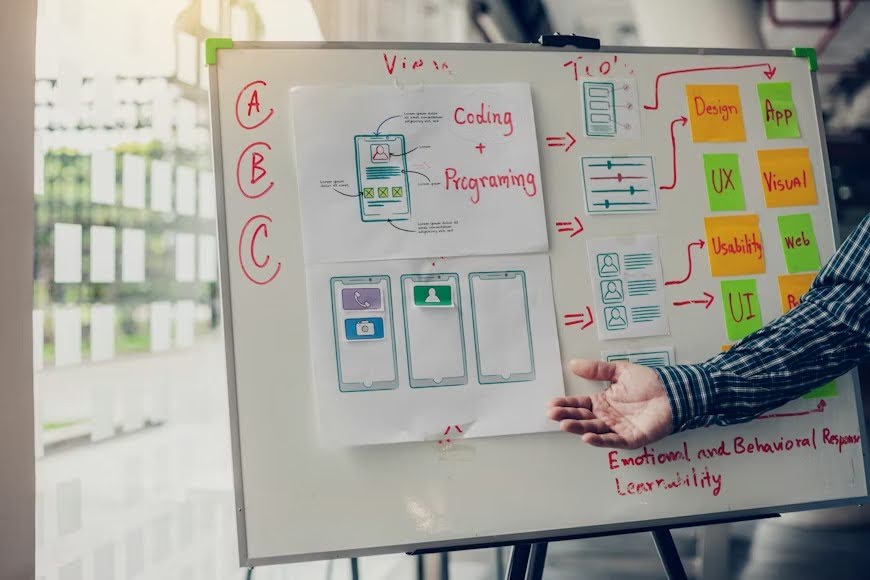
The journey from concept to production-ready prototype follows a systematic progression through increasingly refined stages.
Initial Concept to Proof of Principle
Every production-ready prototype begins as a rough concept that proves fundamental technical feasibility. This first stage focuses on answering basic questions: Does the core technology work? Can we achieve the primary function? Is this approach viable?
These early prototypes often use readily available components, 3D-printed parts, or handcrafted elements to demonstrate functionality without regard to manufacturing methods or final materials.
During this phase, it's crucial to validate the fundamental principles without getting distracted by aesthetics or production considerations. A medical device company might use breadboard electronics and basic sensors to demonstrate that its monitoring algorithm works before investing in miniaturization.
The output of this stage should be a clear technical validation of core functionality and a path forward to begin engineering development. While these early prototypes bear little resemblance to production units, they lay the foundation for all subsequent development.
Engineering Validation Testing (EVT)
Once the basic concept is proven viable, development moves to Engineering Validation Testing (EVT). EVT prototypes represent the first serious attempt to create a product that could, in theory, be manufactured, though not necessarily at scale or at target cost.
These prototypes incorporate proper engineering principles, including appropriate material selections, reasonable tolerances, and functional electronic systems.
EVT prototypes undergo rigorous functional testing to validate the engineering approach. A consumer electronics product might be tested for electrical safety, thermal management, and core functionality.
During EVT, manufacturing partners may be consulted, but aren't typically deeply involved yet. The goal is to create a stable engineering foundation before optimizing for production.
Design Validation Testing (DVT)
Design Validation Testing (DVT) represents a critical shift toward manufacturing reality. DVT prototypes incorporate nearly final designs using production-intent materials and manufacturing methods wherever possible.
These prototypes look and function almost identically to the planned production units, though they may still be produced using temporary tooling rather than final production tooling.
During DVT, the focus expands beyond pure functionality to include usability, reliability, and manufacturability. Extensive testing simulates real-world usage scenarios, including drop testing, environmental exposure, extended usage, and stress testing.
Manufacturing partners become heavily involved during DVT, providing feedback on design features that might cause production challenges. Design for Manufacturing (DFM) reviews identify areas where small changes could significantly improve manufacturability or reduce costs.
A successful DVT phase results in a design that's not only functionally sound but also optimized for efficient production.
Production Validation Testing (PVT)
The final step before full production launch is Production Validation Testing (PVT). PVT prototypes are manufactured using the actual production tooling, materials, assembly lines, and processes that will be used for mass production.
These are no longer prototypes in the traditional sense; they are the first units off the actual production line, built at a limited scale to validate the entire manufacturing process.
PVT focuses on manufacturing consistency, quality control processes, and production efficiency. Statistical process control methods are applied to verify that units are consistently produced within specified tolerances.
A successful PVT run demonstrates that your product can be manufactured at scale with consistent quality and within target cost parameters. Once PVT units have passed all validation tests, you have a truly production-ready prototype, or more accurately, your first production units ready for market release.
Real-World Example: Production-Ready Prototype
Dyson's product development process is one of the most well-documented examples of rigorous prototype validation in modern manufacturing. When developing the original bagless vacuum cleaner, founder James Dyson built 5,127 prototypes over approximately 5 years before arriving at a design ready for production.
Each prototype introduced a single change, allowing the engineering team to isolate exactly what worked and what didn't. The final result: the DC01, launched in 1993, became the top-selling vacuum cleaner in Britain within two years, despite being priced significantly higher than competitors'.
Dyson applied the same philosophy to its Supersonic hair dryer, investing $71 million and four years of development with a team of 103 engineers who created 600 prototypes and filed over 100 patents. Prototypes were tested on more than 1,010 miles of real human hair to validate performance across different hair types.
The production-ready prototypes had to pass thermal testing (air temperature is measured 20 times per second), acoustic testing, and durability testing before the product was approved for manufacturing.
This commitment to exhaustive prototype validation before committing to production tooling is a key reason Dyson products consistently command premium pricing and maintain strong brand loyalty in competitive markets.
Production-Ready Prototyping Done Right With Rabbit Product Design
At Rabbit Product Design, production-ready prototyping is built into our DNA. We don't use 3D prints and call them prototypes. We build functional, high-fidelity prototypes using machined parts and production-grade materials that reflect real manufacturing constraints. This means when your prototype works, you can be confident the production version will too.
Our structured process covers feasibility, concept development, industrial design, engineering, production-ready prototyping, manufacturing setup, branding, and launch planning.

Our senior-level engineers with an average of 27 years of experience manage every project, ensuring your design is optimized for manufacturability from the start.
We don't skip stages or cut corners, because catching a flaw at the prototype stage costs thousands and catching it after production launch costs millions.
Whether you're a first-time inventor or an established company, we take your product from concept through production and into the market. No vendor juggling, no false confidence; just real prototypes built for real manufacturing.
Start Your Product Journey Today→
Frequently Asked Questions (FAQs)
What is a production-ready prototype?
A production-ready prototype uses the final materials, components, and manufacturing processes planned for mass production. It should be indistinguishable from the actual product and validate that your design can be manufactured reliably and consistently, and at target costs.
How long does it take to develop a production-ready prototype?
Timelines vary by complexity. Simple consumer products may reach production readiness in 6–9 months; electronics typically require 9–15 months; and complex medical devices or automotive systems can take 18–36 months. Rushing the process usually leads to costlier revisions later.
Can I skip prototype stages to get to market faster?
It's not recommended. Each stage validates specific aspects of functionality, design, and manufacturability. Skipping EVT or DVT often results in problems surfacing during production, causing delays and costs far greater than the time saved.
Why shouldn't I use 3D printed prototypes for production validation?
3D printed parts don't reflect real manufacturing constraints. They use different materials, exhibit different mechanical properties, and hide issues such as tolerance stackups, draft angles, and assembly challenges that only appear during production. This creates false confidence in a design that may fail in manufacturing.
How does Rabbit Product Design handle production-ready prototyping?
Rabbit Product Design builds functional, high-fidelity prototypes using machined parts and production-grade materials, never low-cost 3D prints. Our senior engineers with 27+ years of experience manage every project through a structured process covering feasibility, design, engineering, prototyping, manufacturing setup, branding, and launch planning, ensuring your product is built for real production from day one.
*Disclaimer: This content is for educational purposes only and not financial, legal, or business advice. Figures vary by circumstance. Consult qualified professionals before making decisions. For personalized guidance, contact Rabbit Product Design.