
Physical Product Development Process: Step-by-Step Guide (with Examples)
Key Takeaways
A successful physical product development process follows 8 distinct phases, from idea generation to post-launch analysis.
Identifying and validating market opportunities early can save significant time and resources in later stages.
Prototyping should progress methodically from low-fidelity concepts to functional models before manufacturing begins.
Design for manufacturability (DFM) is often overlooked but essential for efficiently scaling production.
Continuous feedback loops throughout development increase the likelihood of market success and product adoption.
Rabbit Product Design operates a structured, end-to-end development system that takes physical products from feasibility through manufacturing setup and launch.
The Physical Product Development Process: From Idea to Market
Creating a physical product involves transforming abstract concepts into tangible goods that customers can touch, feel, and use. This transformation doesn't happen overnight. Instead, it unfolds through a series of well-defined phases, each building on the previous one.
Physical product development typically follows eight distinct phases: idea generation and market research, concept development and initial design, engineering and technical specifications, prototyping and testing, design for manufacturability, production planning and scaling, market launch and distribution, and finally, post-launch analysis and iteration.
Each phase requires different skills, tools, and expertise.
8 Phases of Physical Product Development: Step-by-Step Guide
Phase 1: Idea Generation & Market Research

Every great product begins with identifying a problem worth solving. The most successful physical products address genuine pain points or unfulfilled desires.
This initial phase focuses on identifying and validating opportunities through thorough market research. Without this foundation, even beautifully designed products risk being rejected by the market.
The idea generation phase should be both creative and analytical. Start with divergent thinking to explore multiple possibilities, then converge on ideas with the greatest potential. Document your insights, assumptions, and hypotheses during this phase because they'll guide your research efforts and help you stay focused on solving real problems.
Example: How Dyson Identified a Gap in the Vacuum Market
James Dyson's journey to revolutionize the vacuum cleaner market began with personal frustration. While using a conventional vacuum cleaner, he noticed it quickly lost suction as the bag filled with dust. Rather than accepting this limitation, Dyson recognized it as a significant market opportunity.
He observed that industrial sawmills used cyclone technology to remove dust from the air without clogging, which sparked his idea for bagless vacuum technology. Dyson spent five years creating 5,127 prototypes before arriving at his final design. This relentless commitment to solving a real problem resulted in a product that disrupted an established market.
Phase 2: Concept Development & Initial Design
Once you've identified a promising opportunity, the next phase transforms abstract ideas into initial design concepts. This can be done using visual representations, such as hand-drawn sketches.
Sketching allows designers to quickly explore multiple design directions without significant investment. These early sketches shouldn't focus on details; rather, they should capture the essence of the solution and its key functional elements. As concepts mature, they move from rough sketches to more refined renderings that communicate the product's form, proportions, and intended user experience.
Digital tools like CAD software enable more precise visualization, but don't rush to this step before exploring broad concepts through hand sketches. Remember that early flexibility leads to better final designs. The goal at this stage isn't perfection but rather generating multiple concepts that address the core user needs.
Example: GoPro's Evolution from Concept to First Prototype
Nick Woodman founded GoPro after struggling to capture quality action photos during a surfing trip to Australia. His initial concept was remarkably simple: a wrist strap system for an existing camera.
Woodman's first sketches focused on how the camera would attach to a surfer's body and protect the camera from water damage, addressing the core problems he had experienced firsthand.
Phase 3: Engineering & Technical Specifications
With promising concepts in hand, the engineering phase translates design intent into technical specifications that detail how the product will actually work. This stage involves mechanical engineering, electrical design (for electronic products), material selection, and component specification. Engineers must balance performance requirements against cost constraints, manufacturing limitations, and regulatory standards.
A technical specifications document details every aspect of the product's functionality, from dimensions and tolerances to power requirements and performance benchmarks. These specifications serve as the blueprint for prototyping and eventual manufacturing.
Collaboration between designers and engineers is crucial during this phase to ensure technical decisions support the product vision rather than compromise it.
Example: How Tesla Engineers Their Battery Systems
Tesla's approach to battery engineering exemplifies the process of material selection and technical specification. Rather than relying on off-the-shelf cells, Tesla co-developed custom battery cells optimized for automotive applications, first partnering with Panasonic on modified 18650 cells, then moving to the larger 2170 format for Model 3, and eventually designing the 4680 cell in-house.
Each transition involved evaluating trade-offs between energy density, thermal stability, charge rates, cost, and manufacturability. The 4680 cell, unveiled in 2020, was designed to deliver five times the energy, six times the power, and 16 percent more range than its predecessor while reducing cost per kilowatt-hour.
Tesla's engineering specifications extended beyond the cells themselves to include structural battery packs integrated directly into the vehicle chassis, turning a component specification decision into a fundamental change in vehicle architecture.
Phase 4: Prototyping & Testing
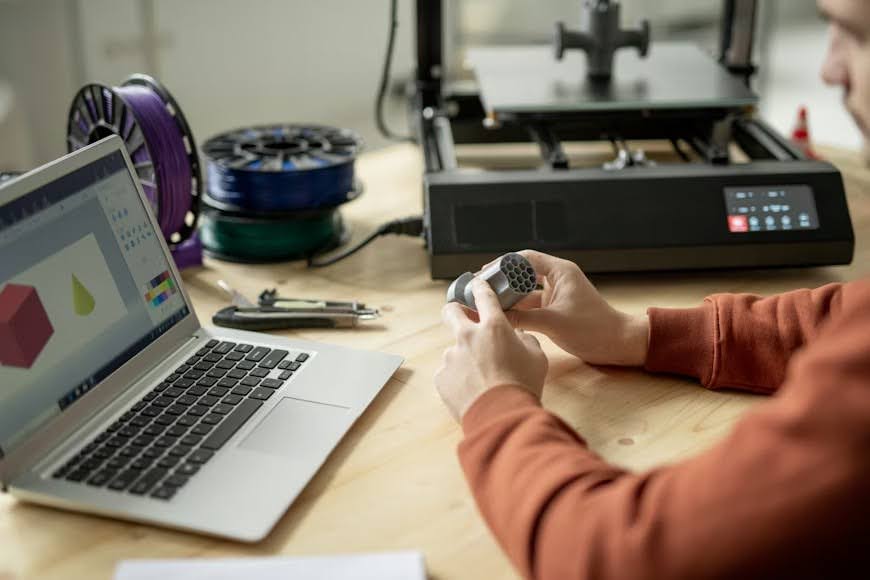
Prototyping transforms theoretical designs into tangible objects that can be evaluated, tested, and refined.
The prototyping phase reveals unforeseen challenges and opportunities that weren't apparent in digital designs. Effective prototyping typically follows a progression from low-fidelity to high-fidelity models, each serving a distinct purpose in the development process.
Low-fidelity prototypes might be crafted from foam, cardboard, or hand-fabricated mockups to evaluate basic form, ergonomics, and proportions without significant investment. These early prototypes help teams identify fundamental issues before committing resources to more detailed development.
As the design matures, appearance prototypes more accurately represent the product's final aesthetic, using materials and finishes that approximate the intended production version. Lastly, functional prototypes incorporate working mechanical and electronic systems to validate technical feasibility and performance.
Example: How Allbirds Perfected Their Wool Runners Through Iteration
Allbirds' path to their successful Wool Runner involved years of development and iteration. Co-founder Tim Brown, a former professional soccer player from New Zealand, first secured a grant from New Zealand's wool industry to develop a merino wool textile suitable for footwear. It is a material no one in the shoe industry has used before.
In 2014, Brown launched a Kickstarter campaign that met their maximum target in just five days, far exceeding its goal and validating real consumer demand for a sustainable wool shoe. He then partnered with Joey Zwillinger, a biotechnology engineer and renewables expert.
Together, they spent over a year refining prototypes and solving challenges unique to engineering wool into athletic footwear before officially launching the Wool Runner in March 2016. The direct-to-consumer model allowed rapid feedback from early buyers, which Allbirds used to continuously refine the shoe, tweaking the design continually since launch.
Phase 5: Design for Manufacturability (DFM)
Design for manufacturability (DFM) transforms a functioning prototype into a product that can be efficiently manufactured at scale. DFM involves analyzing every component and assembly process to eliminate unnecessary complexity.
Common DFM principles include minimizing part count, standardizing components, designing for automated assembly, and reducing material waste. These optimizations not only reduce production costs but also often improve product reliability by eliminating potential failure points.
Example: Apple's Unibody MacBook Design
Apple's introduction of the unibody MacBook Pro in 2008 exemplifies masterful design for manufacturability. Rather than assembling the laptop chassis from multiple parts, Apple engineered a manufacturing process that mills the entire top case from a single aluminum block.
This approach eliminated dozens of components and assembly steps, creating a stronger, lighter product with better thermal performance and improved reliability.
Phase 6: Production Planning & Scaling
With a manufacturing-ready design established, production planning focuses on establishing the systems, partnerships, and processes needed to reliably produce your product at scale. This phase involves supply chain development, quality control systems, logistics planning, and the setup of production facilities. Thoughtful production planning prevents costly disruptions and quality issues as volumes increase.
Production planning must account for anticipated demand patterns, including seasonal fluctuations and growth projections. These forecasts inform decisions about manufacturing capacity, inventory levels, and supply chain resilience. Consider how production volumes might evolve over time and design systems that can scale accordingly without requiring complete redesigns.
Example: How OXO Scales Production While Maintaining Quality
OXO's Good Grips kitchen tools have earned a reputation for exceptional quality and thoughtful design despite being produced at scale.
The company's success began with a 30-year strategic partnership with New York design firm Smart Design, which developed the original Good Grips line and helped expand it from an initial launch of 20 kitchen tools into over 500 products across categories, including cleaning, gardening, bath, and children's products.
Smart Design's process combined extensive customer research, human factors testing, and design-for-manufacturing expertise to create detailed specifications for each product. OXO then worked closely with manufacturing partners to ensure these specifications translated into consistent production quality.
Phase 7: Market Launch & Distribution
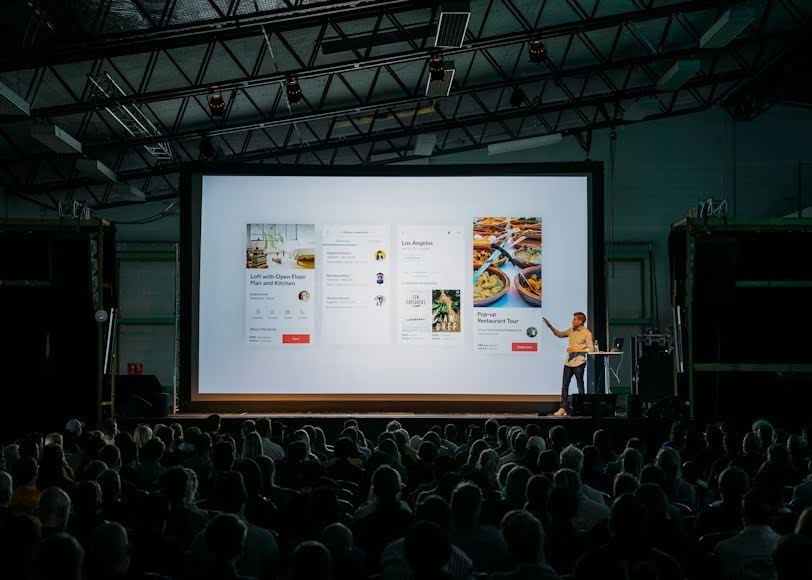
A successful market launch transforms a manufactured product into a commercial success through strategic pricing, distribution, marketing, and sales efforts.
This phase requires careful coordination across multiple business functions and external partners to ensure the product reaches target customers effectively and creates a positive first impression.
Launch planning should begin well before production, with marketing teams developing positioning, messaging, and promotional strategies aligned with the product's value proposition.
Sales teams need training on product features, competitive advantages, and target customer profiles. Customer support must be prepared to address questions and concerns as the product enters the market.
Example: How Apple Creates Product Launch Events
Apple has mastered the art of building pre-launch excitement through meticulously orchestrated product launch events. Their formula begins with carefully controlled information leaks that generate speculation while revealing just enough to pique curiosity. They select venues with symbolic significance, such as the Steve Jobs Theater, and craft a narrative for each product that emphasizes how it will improve users' lives rather than just its technical specifications.
Apple's product launches feature carefully rehearsed demonstrations that showcase real-world applications rather than abstract features. Presenters use consistent language that reinforces brand values like simplicity, innovation, and quality.
The company times its announcements strategically, often leaving just enough time between reveal and availability to generate pre-orders without frustrating customers with excessive delays. This orchestrated approach consistently generates massive media coverage and customer enthusiasm, which translates directly into sales.
Phase 8: Post-Launch Analysis & Iteration
Post-launch analysis provides critical insights that inform both immediate improvements and future product generations. Systematic data collection should track key performance indicators, including sales volumes, customer satisfaction, support requests, returns, and product failures.
These metrics help identify opportunities for improvement and validate that the product is delivering on its intended value proposition. Early detection of issues allows for rapid intervention before brand reputation is damaged.
Example: How Instant Pot Evolves Based on User Feedback
Instant Pot has become a kitchen staple by continuously refining its products based on user feedback. Founder Robert Wang personally read tens of thousands of Amazon reviews and introduced updated models every 12 to 18 months, incorporating customer suggestions.
Each generation added new features driven by real customer input, growing from a five-in-one device in 2010 to models offering up to 13 cooking functions. The company also developed the Instant Connect companion app, providing guided recipes and, on Wi-Fi-enabled models, remote control of cooking settings.
This systematic approach to incorporating feedback, rather than relying solely on internal R&D, created exceptional customer loyalty and a passionate community that became the brand's primary marketing engine.
How Rabbit Product Design Runs the Physical Product Development
At Rabbit Product Design, our development system guides every project through a defined framework: feasibility, concept development, industrial design, engineering, production-ready prototyping, manufacturing setup, branding, and launch planning.
Each phase feeds directly into the next, and every decision is made with manufacturability and commercialization as the end goal. We don't stop at a prototype that looks good in a pitch deck. We build prototypes using production materials and processes so clients know exactly what they're taking to market.
We don't encourage clients to chase patents before they have a real product, and we don't rely on 3D printing as a stand-in for production validation. The only path we support is building a product, manufacturing it, and selling it as a business. Our senior engineers average 27+ years of experience and have taken hundreds of products through this exact process.
Schedule a free consultation to see how it works.
Frequently Asked Questions (FAQs)
How long does the physical product development process typically take?
Timelines depend heavily on product complexity and regulatory requirements. Simple consumer products can move from concept to market in 6–9 months, while complex electronics or medical devices may take 18 months to several years.
What is design for manufacturability, and why does it matter?
Design for manufacturability (DFM) is the process of optimizing your product design to be efficiently produced at scale. It involves reducing part counts, standardizing components, simplifying assembly, and ensuring that every feature is compatible with your chosen manufacturing processes.
Should I file a patent before starting product development?
A provisional patent application is sometimes used as a precaution before sharing designs externally, but patents should not be the primary focus of early development. A patent without a real product and business behind it rarely leads to commercial success.
How does Rabbit Product Design approach the physical product development process?
Rabbit Product Design follows a defined development system that covers every phase: feasibility, concept development, industrial design, engineering, production-ready prototyping, manufacturing setup, branding, and launch. Every prototype is built with production materials and methods to validate manufacturability before tooling begins.
*Disclaimer: This content is for educational purposes only and not financial, legal, or business advice. Figures vary by circumstance. Consult qualified professionals before making decisions. For personalized guidance, contact Rabbit Product Design.