Patent vs Design Registration: Differences, Examples & Use Cases
Key Takeaways
Patents and design registrations protect different things. A patent protects how something works (the functional, technical innovation behind a product, process, or method), while a design registration protects how something looks (the visual appearance, shape, configuration, or ornamentation that makes a product distinct).
Patents offer longer protection but require a higher bar to obtain. Utility patents last up to 20 years and demand novelty and non-obviousness. A real-world example includes Apple's multi-touch system and Pfizer's Lipitor compound.
Design registrations are faster, cheaper, and visually focused, generally lasting up to 15 years in the United States (and around 10 to 15 years in most other jurisdictions). Iconic examples include the Coca-Cola contour bottle and the Crocs shoe silhouette.
The right protection depends on your competitive edge. Choose a patent when your innovation is functional, technical, or built around a novel solution. Choose design registration when your product wins on aesthetics, shape, or visual identity.
At Rabbit Product Design, we help you build products worth protecting in the first place. Instead of treating patents as the goal, our team focuses on turning ideas into real, manufacturable, commercially viable products through a structured four-phase process to deliver products that actually ship.
Patents vs Design Registration: An Overview
The core difference between a patent and a design registration is straightforward: one covers how a product works, and the other covers how it looks.
Patents secure the functional, technical, or mechanical innovation behind an invention and last up to 20 years, while design registrations secure the visual appearance of a product (its shape, configuration, pattern, or ornamentation) and typically last up to 15 years.
Many product development firms push inventors toward patent filings by default, treating IP as a milestone rather than a tool, which often results in costly paperwork that never converts into a real business.
At Rabbit Product Design, we help inventors choose the form of protection that actually fits their product and commercial strategy, so IP supports a manufacturable business instead of replacing one.
Below, we break down both forms of protection, the real-world examples that illustrate them, and the use cases where each one makes the most sense.
What is a Patent?
A patent is a legally granted right that gives the inventor exclusive control over how an invention functions. Once granted, it prevents others from making, using, selling, or importing the patented invention without permission, typically for up to 20 years.
Patents exist to reward innovation. By granting a time-limited monopoly, the system gives inventors a window to commercialize their idea without immediate competition. In exchange, the full details of the invention become publicly available, contributing to the broader knowledge base once the patent expires.
Critically, patent protection is not limited to a product's appearance. It can cover the product's operation, internal mechanism, manufacturing process, materials used, and practical application. This makes patent protection significantly broader in scope than design registration.
What is Design Registration?
Design registration is an IP right that protects the visual features of a product, specifically the elements that give it its appearance. This includes shape, configuration, pattern, and ornamentation as applied to the product.
Where a patent protects the idea behind a product, design registration protects the identity of the product as it appears to the eye. If your competitive advantage is your product's distinctive look or design, design registration is often the more targeted and cost-effective protection option.
Design registration is particularly powerful in industries where visual differentiation drives purchasing decisions, such as fashion, furniture, consumer electronics, packaging, and homewares. A uniquely shaped bottle, a distinctive chair profile, or a recognizable appliance form can all qualify for design protection.
What is the Difference Between a Patent and a Design Registration?
What Each One Actually Protects
A patent protects the functional and technical aspects of an invention, including the mechanism, process, method, and materials. It answers the question: how does this work? Design registration protects the visual and aesthetic features of a product. It answers the question: how does this look?
A patent does not stop someone from making a product that looks identical to yours if they use a different internal mechanism. Equally, a design registration does nothing to stop a competitor from building a product that functions exactly like yours, as long as it looks different enough. This is precisely why some products genuinely need both.
The Eligibility Bar: Which is Harder to Obtain?
Patents carry a significantly higher eligibility threshold. To be granted a patent, your invention must be novel (not previously disclosed anywhere in the world), inventive (not obvious to someone skilled in the relevant field), and useful.
The examination process is rigorous and can take several years. Design registration requires that the design be new and distinctive. This is a lower bar that is typically easier and faster to satisfy, with registration often achievable within months of filing.
Cost & Complexity of Each Application
The technical expertise required to prepare a patent application is far greater than that of a design application. Patent attorneys must craft precise patent claims, detailed descriptions, and technical drawings, all of which contribute to considerably higher professional fees.
Design applications, by contrast, primarily require quality visual representations and are far less complex to prepare. For budget-conscious inventors or early-stage products, design registration offers meaningful protection at a fraction of the cost of a patent.

Patent applications are typically complex and more expensive than design applications.
Duration of Protection Compared
Patents last up to 20 years from the filing date, subject to maintenance fees due at 3.5, 7.5, and 11.5 years after grant in the United States. Registered designs last up to 15 years in the United States.
While patents offer a longer window, they come with higher ongoing costs and more stringent maintenance requirements. Design registration's shorter term is often well-matched to the commercial lifecycle of consumer products, particularly in fast-moving markets.
Real-World Examples of Each Protection Type
The theory makes sense on paper, but seeing how patent and design protection play out in real product scenarios makes the decision far more intuitive. Each of the following examples reflects common situations for inventors.
Patent Examples (Protecting How Something Works)
The Dyson Vacuum Cleaner: James Dyson holds patents on the cyclonic separation technology that allows his vacuums to maintain suction without losing power. The protection covers the functional innovation behind the airflow system, not the vacuum's appearance.
The Apple iPhone's Multi-Touch Technology: Apple patented the underlying software and hardware mechanisms that enable multiple-finger input to be detected and processed simultaneously. The patent protects the technical method, not the screen's appearance.
Pfizer's Pharmaceutical Compounds: Lipitor (atorvastatin) was developed by Warner-Lambert chemist Bruce Roth in 1985, and the patent protected the specific chemical compound and its method of treating high cholesterol. Pfizer first co-marketed the drug in 1996 and acquired the patent rights through its $90.2 billion acquisition of Warner-Lambert in 2000, giving Pfizer exclusive rights to manufacture and sell the drug for the remainder of the patent term (which expired in November 2011).
Design Registration Examples (Protecting How Something Looks)
The Coca-Cola Contour Bottle: The iconic curved silhouette of the Coca-Cola bottle is protected as a registered design (and trademark). It doesn't matter what the bottle does; the protection is purely about the recognizable shape.
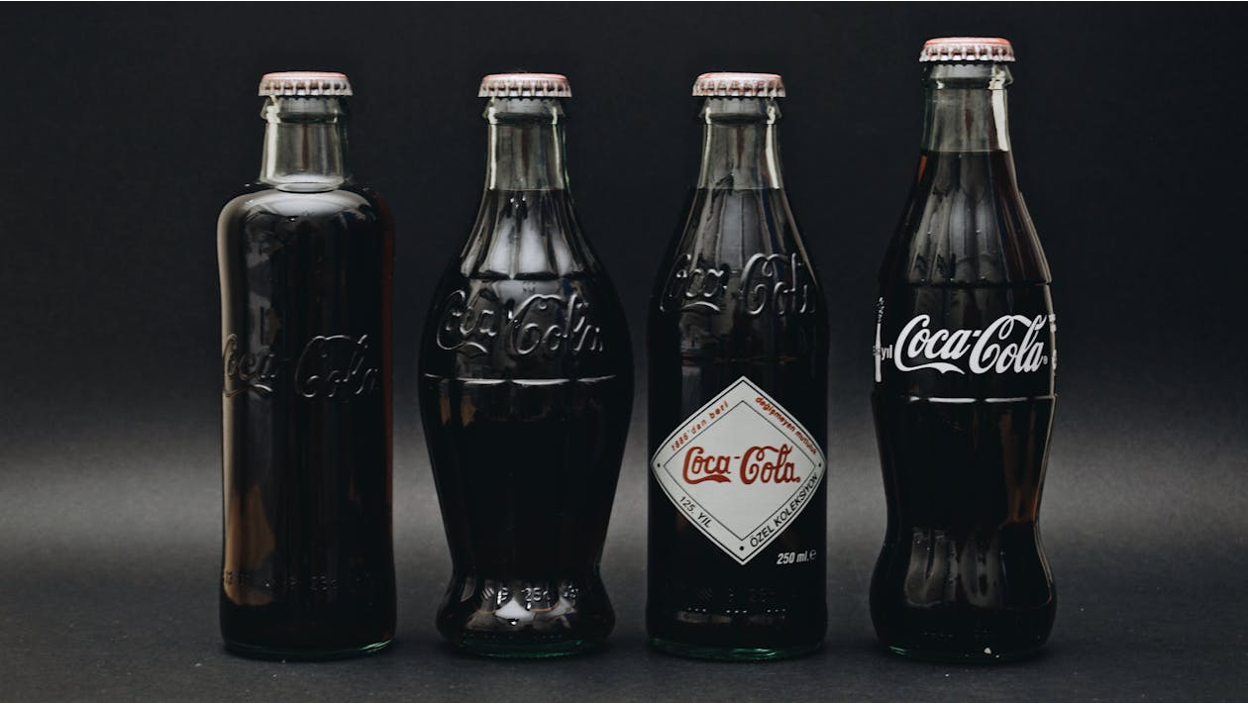
Coca-Cola's design registration protects the visual characteristics of the bottle.
Apple's iPhone Exterior Design: Beyond its patents, Apple holds design registrations on the rounded rectangle shape, the placement of the home button on earlier models, and the overall look of the device. These were central to Apple's lawsuits against Samsung over the visual similarity of competing smartphones.
The Crocs Shoe Silhouette: The distinctive clog shape of Crocs footwear, including the perforated upper and ankle strap, is protected through design registrations in multiple countries, preventing competitors from selling lookalike products.
Use Cases: Which Protection Is Right for Your Situation?
Choosing between a patent and a design registration comes down to one fundamental question: are you protecting an idea, or an appearance? Below are the most common use cases where each form of protection, or both together, makes the most sense.
Tech-driven product with a novel mechanism: Patent. The function is the value, and you need long-term exclusivity over how it works.
Fashion or lifestyle product with a signature look: Design registration. Fast, affordable, and directly targeted at what competitors are likely to copy.
Consumer electronics with a unique form factor and new internal technology: Both. File strategically with careful attention to timing and disclosure.
Packaging with a distinctive shape: Design registration. The visual identity of packaging is exactly what design IP was built to protect.
A manufacturing process or method: Patent only. There is no visual element to register; the process itself is the invention.
A software-integrated hardware device: Likely patent, potentially both. Software functionality may be patentable depending on jurisdiction; the device's appearance may warrant design registration.
The right choice depends on what's most valuable to your business and where competitors are most likely to challenge you. When in doubt, consulting an IP attorney early can help you avoid costly gaps in protection later.
Patent vs Design Registration: Comparison Table
Why You Should Start Building with Rabbit Product Design
Rabbit Product Design is led by a team of senior engineers with an average of 27+ years of experience.
The choice between a patent and a design registration comes down to what gives your product its edge: function or form. Both can be valuable, but neither matters if the product itself never reaches the market.
At Rabbit Product Design, we treat IP as a tool that supports a real, manufacturable product, not a substitute for one. Our team takes physical products from concept through commercialization with senior engineering expertise and pay-as-you-go pricing. If you want to build a product worth protecting, start your journey with us today.
Start building with Rabbit Product Design today.
Frequently Asked Questions (FAQs)
Can I apply for both a patent and a design registration on the same product?
Yes, and in many cases, it is the smartest move. A patent and a design registration protect entirely different aspects of a product, so filing both creates a layered IP position. One secures the function; the other secures the appearance. The critical consideration is timing: filing one application must not publicly disclose information that destroys the novelty required for the other.
What happens if I disclose my invention before applying for a patent?
This is one of the most common and costly mistakes inventors make. Sharing your idea at a trade show, posting about it on social media, or even discussing it in an unsecured meeting can constitute public disclosure. Once that novelty is destroyed in a jurisdiction with no grace period, no patent can be obtained there.
Is design registration cheaper than a patent?
Yes, significantly. Design registration involves lower professional fees because the application is far less technically complex. There are no claims to draft, no detailed functional descriptions required, and the examination process (where applicable) is less intensive.
Does design registration protect how a product works?
No. Design registration protects only the visual features of a product, including its shape, configuration, pattern, and ornamentation. It provides no protection whatsoever over how the product functions, the mechanism behind it, the materials it uses, or the process by which it operates.
How does Rabbit Product Design help inventors approach patent and design registration decisions?
At Rabbit Product Design, we don't treat patent or design registration as the end goal. Instead, we treat them as strategic tools that should support a real, manufacturable product, not replace one. We focus on helping inventors build products that are production-ready, commercially viable, and protectable in ways that actually matter, so your IP strategy works for your business, not against it.
*Disclaimer: This content is for educational purposes only and not financial, legal, or business advice. Figures vary by circumstance. Consult qualified professionals before making decisions. For personalized guidance, contact Rabbit Product Design.