Injection Molding vs 3D Printing for Prototyping: Cost, Pros & Cons
Key Takeaways
Injection molding becomes more cost-effective than 3D printing once production exceeds approximately 100–500 units, with the exact breakeven point depending on part complexity and size.
3D printing offers unmatched design freedom and rapid prototyping, while injection molding provides a superior surface finish and consistent mechanical properties.
Material selection is significantly broader with injection molding, offering over 25,000 engineered resins compared to roughly 100 options for 3D printing.
A hybrid approach using 3D-printed molds for injection molding can deliver production-quality parts at lower initial tooling costs for small to medium runs.
Rabbit Product Design builds prototypes using production materials and processes, ensuring that what you test actually reflects what you'll manufacture, eliminating the false confidence that 3D-printed prototypes often create.
Injection Molding vs 3D Printing: What Matters Most
When selecting a prototyping method, five key factors should drive your decision: production volume, timeline requirements, design complexity, material specifications, and budget constraints. Understanding how each technology performs across these dimensions is essential to making the right choice.
3D printing offers speed and design freedom with no tooling costs, making it ideal for early concept validation. Injection molding delivers production-grade materials and consistent mechanical properties, which are essential for functional testing and regulatory approval.
The cost crossover between the two typically falls between 100 and 500 units, though factors like part geometry, material requirements, and tooling choices can shift that threshold significantly.
In this article, we break down how each method works, compare their costs, materials, and limitations side by side, and walk through the scenarios where one clearly outperforms the other.
Injection Molding for Prototyping: When It Makes Sense
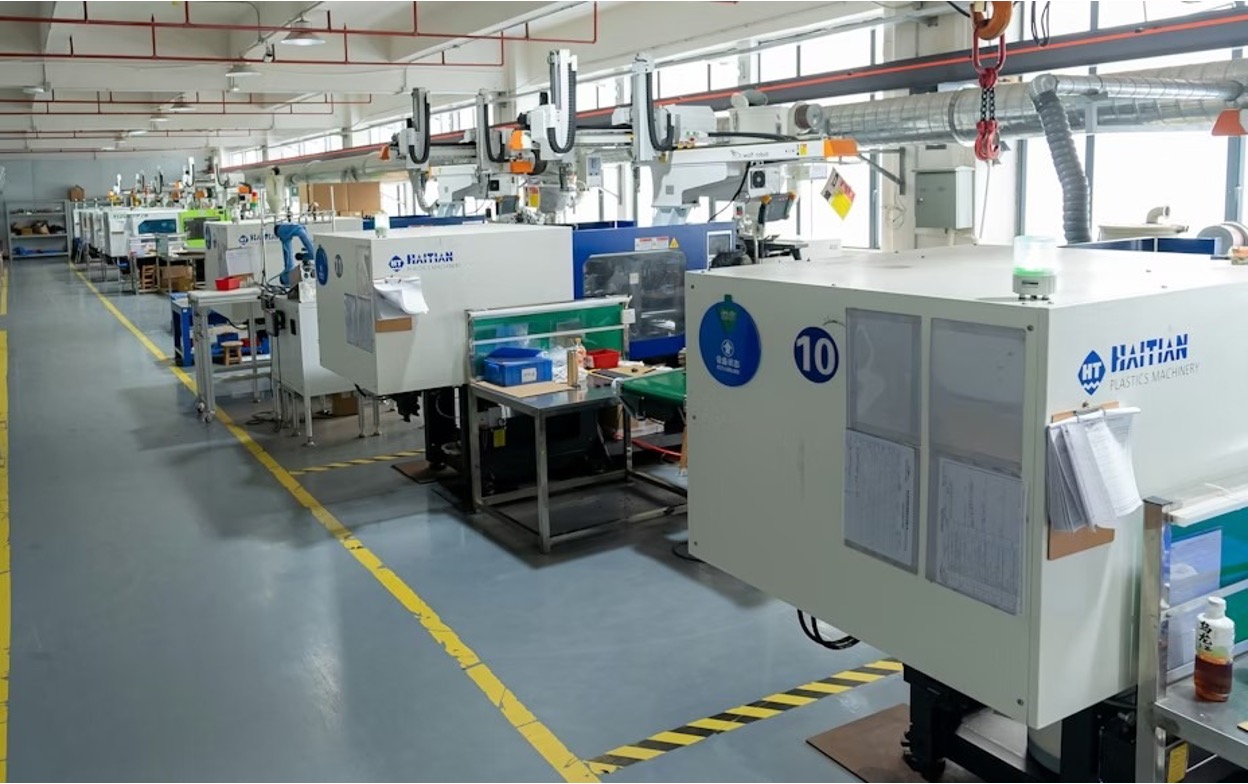
For products requiring production-identical materials, using injection molding for prototyping can streamline the manufacturing process.
Contrary to popular belief, injection molding isn't reserved exclusively for mass production. In certain scenarios, it represents the optimal prototyping solution.
When your prototype requires specific engineering-grade materials or when you need to validate parts under production-identical conditions, injection molding delivers unmatched accuracy. Additionally, for products requiring regulatory approval, using the final production process for prototyping can streamline certification.
How Injection Molding Works
Injection molding creates parts by injecting molten material into a precision-machined mold cavity under high pressure. The process begins with plastic pellets being melted in a heated barrel, then forced into the mold through an injection unit. Once the material cools and solidifies in the mold, the part is ejected, yielding a finished product that requires minimal post-processing.
The mold itself, typically crafted from tool steel, consists of two halves: the cavity (female) and the core (male). These components are precision-machined to create the negative space that forms the final part, including features such as bosses, ribs, textures, and undercuts. For prototyping, aluminum molds offer a more cost-effective alternative to steel, though they have a limited production lifespan.
Cost of Injection Molding
The economic equation for injection molding involves significant upfront investment in tooling, ranging from $3,000 to $100,000+, depending on part complexity, size, and mold requirements. This initial expenditure creates the greatest barrier to using injection molding for prototyping.
However, the per-part costs drop dramatically as production volume increases, often to mere cents per part for simple components. For prototyping specifically, aluminum tooling offers a middle-ground solution, typically costing less than steel molds while still delivering production-grade parts.
Material Options & Properties
One of injection molding's greatest strengths lies in its material versatility. The process accommodates over 25,000 engineered thermoplastics, thermosets, elastomers, and specialty compounds; far exceeding the materials available for 3D printing.
This extensive selection enables precise material property matching for prototypes, including specific durometer ratings, chemical resistance, thermal stability, biocompatibility, and regulatory certifications.
For functional prototyping, this material advantage cannot be overstated. When testing requires specific flame-retardant properties, medical-grade biocompatibility, or food-safe certification, injection molding often remains the only viable option. Additionally, multi-material or overmolding capabilities allow the creation of complex prototypes with varying material properties in a single part.
Pros & Cons of Injection Molding for Prototyping
Pros: Production-identical material properties, excellent surface finish, consistent part dimensions, ability to incorporate complex features (living hinges, snap fits, thin walls), minimal post-processing, tooling that can transition to low-volume production, and suitability for regulatory testing, functional validation, safety-critical applications, and near-production designs.
Cons: High tooling costs ($3,000–$100,000+), 2–8 week lead times, costly design changes that require tool modifications or retooling, limited flexibility for iteration, and poor cost efficiency for early-stage concept validation.
3D Printing for Prototyping: When It Makes Sense
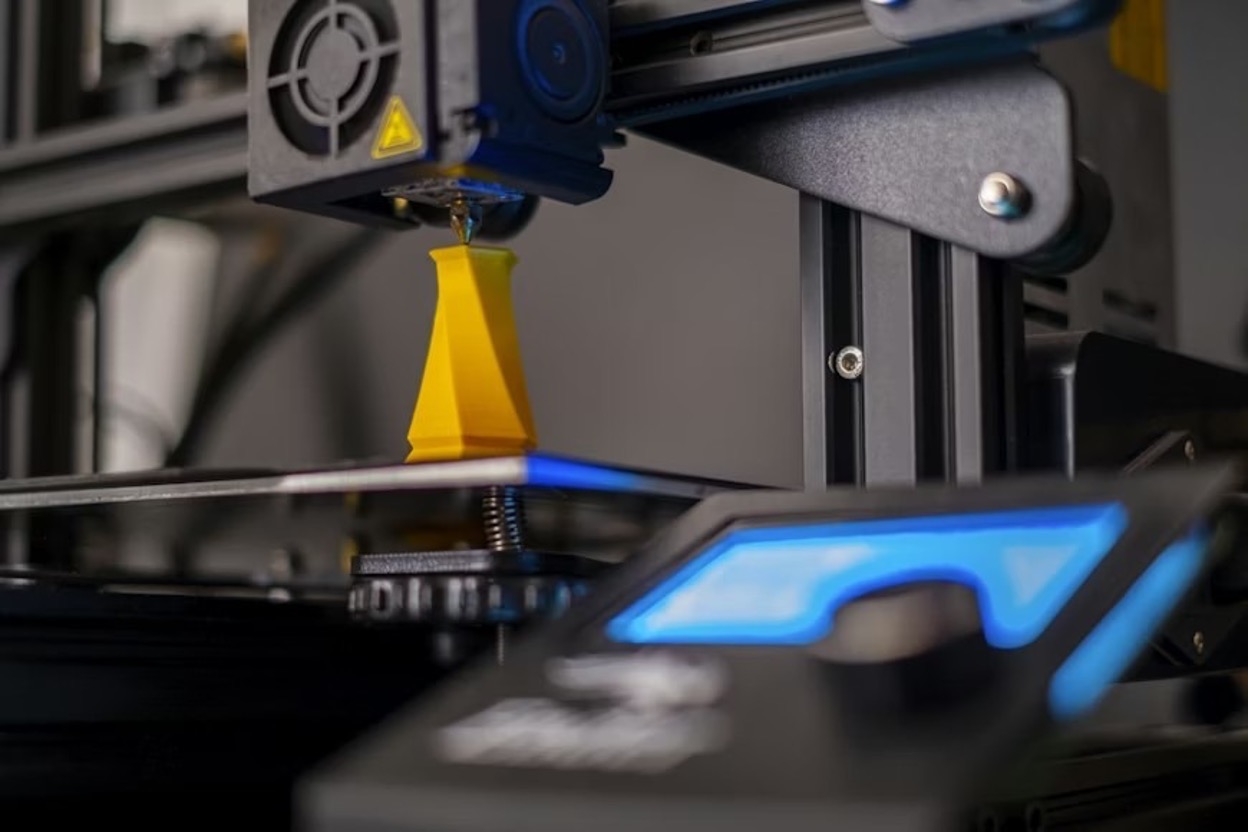
3D printing has fundamentally transformed the prototyping landscape by enabling rapid design iteration with minimal lead time.
Unlike injection molding, 3D printing builds parts layer by layer directly from digital models, eliminating the need for tooling and dramatically shortening the concept-to-prototype cycle. This capability allows designers to test multiple iterations in the time it would take for a single injection-molded prototype.
The technology's key advantage lies in its ability to produce complex geometries that would be difficult or impossible to create through traditional manufacturing methods.
Types of 3D Printing Technologies
The 3D printing ecosystem encompasses several distinct technologies, each offering different advantages for prototyping applications. Fused Deposition Modeling (FDM) represents the most accessible and affordable option, extruding thermoplastic filaments layer by layer to build parts with moderate detail and mechanical properties.
While FDM offers the lowest entry cost, its layer lines and limited resolution make it better suited to conceptual prototypes than to presentation prototypes. Stereolithography (SLA) and Digital Light Processing (DLP) utilize light-cured liquid resins to produce parts with exceptional surface finish and fine details.
These technologies excel at creating smooth, precise prototypes ideal for visual models, fit-testing, and certain functional applications. Material properties have historically been limited, though engineering resins now offer improved temperature resistance, flexibility, and durability.
Cost of 3D Printing
3D printing costs vary widely based on material, part size, complexity, and technology used. As a general guide, basic small prints run $10–$100, medium-detailed prints $100–$500, and large or highly detailed prints $500–$5,000+.
For plastic parts, a simple prototype in PLA starts at $14 for a small part, while more advanced materials like carbon-fiber-reinforced nylon cost around $26 for the same part. Ordering in small batches significantly reduces per-unit cost.
Key cost drivers include material choice (PLA is the cheapest, metals are the most expensive), print technology (FDM is the cheapest, SLS and metal powder bed fusion cost more), part size, resolution, and lead time.
Design Freedom & Complexity
3D printing's layer-by-layer construction methodology enables unprecedented design freedom, allowing features that would be impossible to mold conventionally.
Complex internal structures, consolidated assemblies, and organic forms can be created without the draft angles, parting lines, and ejection considerations that constrain injection-molded designs. This capability allows engineers to optimize parts for function rather than manufacturability during the prototyping phase.
Pros & Cons of 3D Printing for Prototyping
Pros: Rapid turnaround (often 1 to 5 days), no tooling costs, unlimited design complexity, easy iteration, on-demand production, and ideal for early concept validation, complex geometries, low-volume production, customization, and frequent design changes.
Cons: Limited material options, inconsistent mechanical properties, visible layer lines depending on the technology, size restrictions, variable surface finish quality, and higher per-unit costs for larger production volumes.
Overall Comparison Table: Injection Molding vs 3D Printing
How Rabbit Product Design Helps You Move Beyond Prototyping to Real Production
Choosing between injection molding and 3D printing comes down to where you are in development and what you're trying to validate. At Rabbit Product Design, we guide clients through this decision as part of a structured development process that covers feasibility, concept development, industrial design, engineering, prototyping, manufacturing setup, branding, and launch.
We don't treat prototyping as an isolated step. Every prototype we build is designed with production in mind, using real materials and processes that reflect manufacturing constraints. We've seen too many products fail because early prototypes built on 3D printing created false confidence that fell apart on the factory floor.
Whether you're an inventor with a first concept or a startup preparing for production, our senior team ensures your prototype actually gets you closer to a product you can manufacture, sell, and build a business around.
Schedule a free consultation to get started.
Frequently Asked Questions (FAQs)
When should I choose injection molding over 3D printing for prototyping?
Injection molding makes sense once your design is stable and you need to validate parts using production-grade materials.
If your prototype requires specific mechanical properties, regulatory testing, or surface finish accuracy, injection molding delivers results that 3D printing cannot match. It's also the better choice when you're planning production runs above 100–500 units.
Why is 3D printing risky as a final prototyping method before manufacturing?
3D printed prototypes often look and feel like finished products but hide critical manufacturability issues. Layer-based construction creates anisotropic properties, limited material options don't reflect real production conditions, and features like snap fits, thin walls, and living hinges behave differently in molded parts.
Relying solely on 3D printing for validation can lead to costly surprises when transitioning to manufacturing.
Can I use both 3D printing and injection molding in the same project?
Yes, and many successful development programs do exactly this. 3D printing is ideal for early concept validation and rapid iteration, while injection molding provides production-equivalent parts for functional testing and regulatory submission. The key is knowing when to transition from one to the other so you don't waste time or budget on the wrong method at the wrong stage.
How does Rabbit Product Design handle prototyping differently?
Rabbit Product Design builds prototypes using production materials and manufacturing processes rather than defaulting to 3D printing. This approach ensures that prototypes reflect real-world constraints from the start, reducing the risk of failure when moving to manufacturing.
Our structured development process (covering feasibility through launch) means prototyping decisions are always made in the context of how the final product will actually be produced and sold.
*Disclaimer: This content is for educational purposes only and not financial, legal, or business advice. Figures vary by circumstance. Consult qualified professionals before making decisions. For personalized guidance, contact Rabbit Product Design.