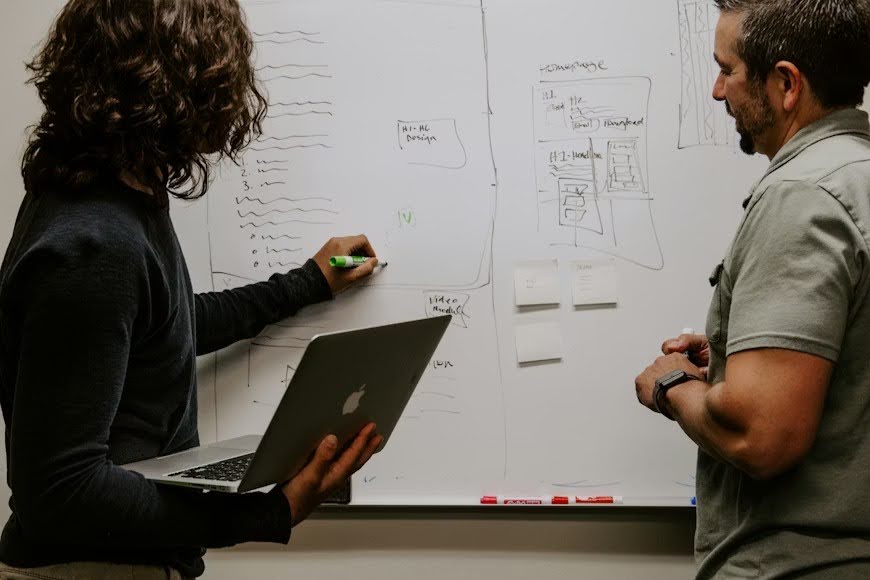
End-to-End Product Development: Meaning, Stages & Examples
Key Takeaways
End-to-end product development encompasses the complete journey from initial concept to market launch and beyond, creating a seamless pathway to successful product creation.
The six-stage process includes discovery, ideation, design, development, launch, and post-launch analysis, with each phase building on the previous one for maximum effectiveness.
Companies like YETI demonstrate that integrated product development approaches can yield revolutionary products that dominate markets.
Using the right tools and frameworks can dramatically reduce time-to-market while ensuring product-market fit and customer satisfaction.
Rabbit Product Design delivers true end-to-end development under one roof, from feasibility through launch, with prototypes built from production materials and every decision oriented toward manufacturability and commercial viability.
What Is End-to-End Product Development? The Complete Picture
End-to-end product development is a comprehensive approach that covers every stage of bringing a product to life, from identifying customer problems to post-launch improvements. Unlike fragmented development models, this holistic methodology ensures seamless transitions between phases, with each step informing and enhancing the next.
It creates a continuous feedback loop that keeps the product aligned with evolving market needs and technological capabilities. This approach recognizes that successful products aren't created in isolation but emerge from synchronized collaboration across departments.
Design, engineering, marketing, sales, and customer support all play crucial roles throughout the development lifecycle, breaking down traditional silos that often impede innovation. This integrated framework allows teams to identify potential issues early, make informed decisions quickly, and pivot when necessary.
The 6 Essential Stages of End-to-End Product Development
The journey from concept to market-ready product follows six distinct yet interconnected stages. Each phase builds upon the previous one, creating a fluid progression that balances structure with adaptability.
While the specific activities may vary depending on industry and product type, these fundamental stages provide a proven framework for successful development.
1. Discovery & Market Research
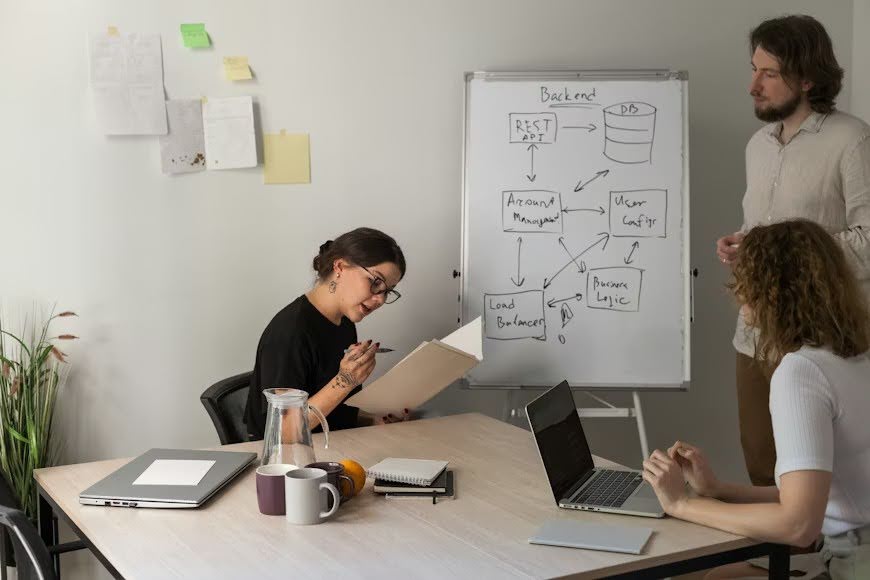
The discovery phase forms the foundation of successful product development, focusing on understanding the problem space before jumping to solutions.
This crucial stage involves comprehensive market research to identify unmet customer needs, evaluate competitive offerings, and reveal potential opportunities. Teams conduct interviews, surveys, focus groups, and analyze existing data to gain deep insights into user pain points and motivations.
Effective discovery requires asking fundamental questions: What problem are we trying to solve? Who experiences this problem most acutely? What solutions currently exist, and where do they fall short? How large is the potential market? This investigative process helps define the product's value proposition and validates whether a real market opportunity exists before committing significant resources.
The insights gathered during discovery directly influence every subsequent development stage. A thorough understanding of user needs creates a solid foundation for ideation, while competitive analysis helps position the product effectively in the marketplace.
2. Ideation & Concept Development
This stage transforms research insights into tangible concepts through structured brainstorming sessions, design sprints, and collaborative workshops. The goal isn't just to generate ideas but to develop concepts that directly address the validated customer problems identified during discovery.
Effective ideation requires balancing divergent thinking (generating numerous possibilities) with convergent thinking (narrowing down to viable options). Teams typically start with broad exploration, considering radical approaches before gradually refining ideas based on feasibility, desirability, and viability criteria. This process often employs frameworks such as "How Might We" questions, mind mapping, and rapid sketching to quickly visualize concepts.
The most promising concepts are then developed into more detailed proposals, complete with preliminary business models, value propositions, and feature outlines. Cross-functional input becomes particularly valuable here, with engineering assessing technical feasibility, marketing evaluating market fit, and business stakeholders analyzing alignment with company strategy.
By the end of this phase, you should have a clearly defined product concept that's ready for more detailed design work.
3. Design & Prototyping
The design phase transforms abstract concepts into tangible representations through iterative prototyping and refinement. Starting with sketches and concept drawings to explore form and function, teams gradually transition toward higher-fidelity representations that reflect real production constraints.
For physical products, this means moving quickly from early concept sketches to prototypes built with production materials and processes, not 3D printed stand-ins that can create false confidence and mask manufacturability issues. Each iteration addresses questions about usability, functionality, and real-world performance while minimizing the cost of changes through early validation.
Prototyping follows a progression from conceptual to concrete. Paper prototypes or simple digital wireframes help validate navigation flows and basic functionality, while higher-fidelity mockups explore visual design elements like color, typography, and imagery. Interactive prototypes then simulate the actual user experience, allowing stakeholders to interact with the product before development begins.
This approach catches usability issues early when they're least expensive to fix. Throughout this stage, design decisions should be guided by established principles and supported by user feedback.
4. Development & Testing
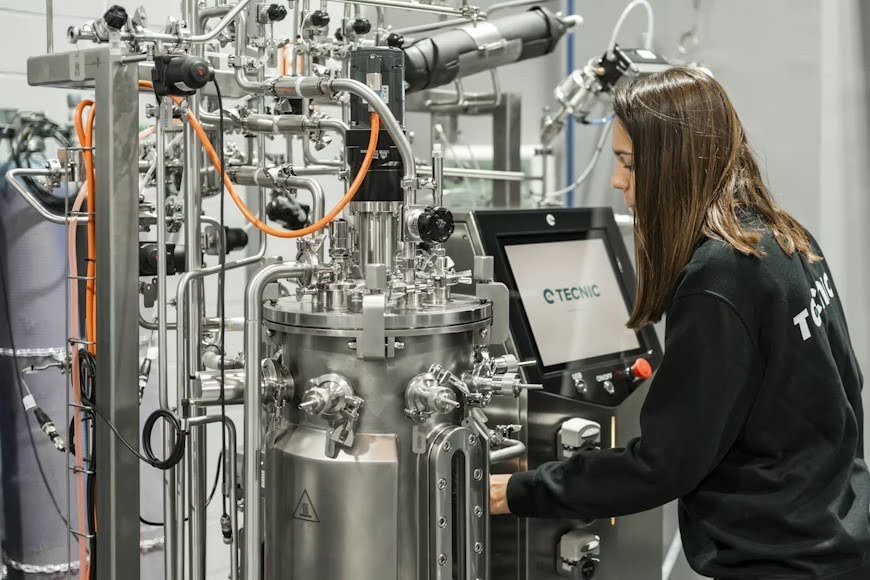
With designs validated and specifications in place, the development phase brings the product to life through disciplined engineering and hands-on validation.
Effective development isn't just about building a prototype; it's about creating a product that performs reliably and can actually be manufactured at scale. This stage requires tight coordination between industrial designers, engineers, and quality assurance teams to ensure the final product matches the intended design, function, and user experience.
This requires thoughtful decisions around materials, manufacturing processes, tolerances, and component sourcing, all grounded in production realities rather than prototype convenience. Development teams should prioritize proving out core functionality first, following a minimum viable product (MVP) approach to get working prototypes into testing as quickly as possible.
Testing occurs continuously throughout development, not just at the end. Individual components are evaluated for dimensional accuracy and material performance, assemblies are checked for fit and function, and complete prototypes undergo real-world use testing under conditions that reflect actual customer environments.
For physical products, this also includes drop testing, thermal cycling, fatigue analysis, and regulatory compliance checks where applicable. The goal is to identify and resolve issues early before tooling is cut and production commitments are made.
5. Launch & Go-to-Market Strategy
The launch phase marks the critical transition from development to market availability and requires careful planning and cross-functional coordination. A comprehensive go-to-market strategy outlines how the product will be introduced, positioned, and sold to target customers.
This includes determining pricing models, distribution channels, marketing campaigns, and sales enablement materials. The most successful launches begin planning this phase early in the development process, ensuring all teams are aligned on messaging and rollout timing.
6. Post-Launch Analysis & Iteration
Product development doesn't end with the launch; it evolves into continuous improvement through careful measurement and iteration. This final stage involves collecting and analyzing real-world usage data, customer feedback, and performance metrics to understand how the product performs against expectations.
Analytics platforms track user behavior, support tickets highlight common issues, and direct customer interviews provide qualitative insights about the product experience.
Successful teams establish clear KPIs before launch and systematically monitor these metrics to identify both problems and opportunities. This might include adoption rates, retention metrics, feature usage, performance benchmarks, and revenue generation.
Regular reviews of this data drive prioritization for future development cycles, creating a virtuous loop where customer feedback directly influences product evolution.
Real-World Examples of Successful End-to-End Product Development
How Dyson Develops Products Through Relentless Iteration
Dyson's approach to product development is rooted in disciplined, hands-on experimentation. James Dyson himself built all 5,127 prototypes of the original DC01 by hand over the course of four years, solving one engineering problem at a time until the design was ready for production.
That culture of rigorous iteration continues today. Dyson now employs around 60 prototyping engineers working across facilities in the UK, Singapore, Malaysia, and the Philippines, collaborating closely with the company's design and manufacturing teams to bring new products to market. The company's testing protocols are equally intensive: vacuum cleaners alone undergo more than 1,000km of push-pull flooring trials and 500,000 cleaner head neck joint swivel tests before they're considered production-ready.
This commitment to iterating with real materials under real-world conditions ensures that every Dyson product is validated for manufacturing long before it reaches the factory floor.
YETI's Founder-Led Design to Premium Manufacturing
YETI started when brothers Roy and Ryan Seiders, both lifelong outdoorsmen, grew frustrated with coolers that couldn't survive the demands of serious fishing and hunting. Roy had been distributing heavy-duty rotomolded coolers from another brand, but the brothers believed they could design something better from the ground up.
After Ryan sold his fishing rod business, they combined their funds to develop a prototype based on their own specifications. They connected with a manufacturer in the Philippines willing to bring their vision to life.
Their key design decision was to use rotational molding (a manufacturing process more commonly used for products like whitewater kayaks and highway barriers) rather than the standard extruded plastic used in most coolers at the time. This produced a seamless, single-piece shell that was dramatically more durable and better insulated than anything else on the market.
As YETI scaled, the company invested in a dedicated Innovation Center in Austin, Texas, where a team of more than 50 engineers, product designers, and category managers prototype and test new products using precision lathes, custom-built destruction-testing equipment, and a range of production-oriented tooling to validate real-world performance.
YETI's development pipeline follows a structured, stage-gate process that balances rigorous quality standards with efficient time-to-market execution.
What End-to-End Product Development Looks Like at Rabbit Product Design
Our senior team handles every step from feasibility to launch planning under one integrated product development process.
At Rabbit Product Design, our product development process covers feasibility, concept development, industrial design, engineering, production-ready prototyping, manufacturing setup, branding, and launch planning, all under one roof, guided by a senior team averaging 27+ years of experience.
Clients enter at different stages, but every project follows the same framework toward manufacturability and commercialization. There are no gaps between phases because the same team owns the product from start to finish.
We don't encourage clients to sell ideas, license concepts, or file patents as a first move. And we don't use 3D printing as a substitute for real production validation. Every prototype we build uses production materials and processes because the goal is never just a prototype; it's a product that works on the factory floor and in customers' hands.
Schedule a free consultation to see how our end-to-end process works.
Frequently Asked Questions (FAQs)
What does end-to-end product development actually mean?
End-to-end product development is a comprehensive approach where every stage of bringing a product to market, from discovery, concept, design, engineering, prototyping, manufacturing, and launch, is managed as a connected system rather than a series of independent handoffs.
How long does end-to-end product development take?
Timelines vary based on product complexity and industry. Simple consumer products may take 6–12 months from concept to launch, while complex electronics or regulated products can require 18–36 months or longer. The end-to-end approach typically accelerates development compared to fragmented methods by identifying issues earlier and enabling parallel work across disciplines.
Do I need to complete every stage in strict order?
Not rigidly. While the stages follow a logical progression, effective development often involves overlap and revisiting earlier phases as new information emerges. What matters is that the purpose of each stage is addressed. Skipping stages entirely, however, almost always leads to costly problems downstream.
How does Rabbit Product Design handle end-to-end product development?
Rabbit Product Design runs a structured development process that covers feasibility, concept development, industrial design, engineering, production-ready prototyping, manufacturing setup, branding, and launch planning.
The entire process is managed by our senior team under one roof, eliminating the handoff gaps that derail most development programs. Prototypes are built with production materials, patents are treated as tools rather than goals, and every decision is made with manufacturing and commercialization as the end targets.
*Disclaimer: This content is for educational purposes only and not financial, legal, or business advice. Figures vary by circumstance. Consult qualified professionals before making decisions. For personalized guidance, contact Rabbit Product Design.