Proof of Concept vs Prototype vs MVP: Meaning, Differences & Examples
Key Takeaways
A Proof of Concept (POC) validates technical feasibility without full functionality, while a prototype demonstrates the look and feel of a product, and the Minimum Viable Product (MVP) delivers core functionality for real user testing.
The development sequence typically follows POC → Prototype → MVP, with each stage requiring increasing investment of time and resources.
Choosing the wrong approach can lead to wasted resources—POCs verify technical possibility, prototypes test design, and MVPs validate market demand.
Rabbit Product Design offers an end-to-end development process that takes products from feasibility and prototyping through manufacturing and launch, ensuring validation efforts translate into market-ready results.
Why Most Product Teams Confuse POC, Prototype, & MVP (& Pay the Price)
Many product teams jump straight into building full-featured products, only to discover nobody wants them. Others get trapped creating endless prototypes without first validating technical feasibility.
The confusion between proof of concept, prototype, and MVP isn't just semantic—it leads to concrete mistakes that can sink promising ideas before they ever reach users.
The terminology itself contributes to this confusion. All three approaches involve building something to test assumptions, but they serve fundamentally different purposes at different stages of product development.
When teams misapply these approaches, they often test the wrong assumptions at the wrong time with the wrong people.
The Hidden Costs of Using the Wrong Development Approach
Choosing the wrong validation approach doesn't just waste time—it can lead your entire product strategy astray. When technical teams build prototypes before proving technical feasibility with a POC, they might create beautiful interfaces for features that simply can't be built within technical constraints.
Conversely, when design teams skip prototyping and go straight to an MVP, they often deliver functional but confusing products that users struggle to navigate.
This isn't just about avoiding waste—it's about maximizing the learning you get from each dollar and hour invested.
Proof of Concept: Validating Technical Feasibility First

Before investing in design or development, smart product teams answer a crucial question: "Can we actually build this?" That's precisely what a proof of concept addresses.
What Exactly Is a Proof of Concept?
A proof of concept (POC) is a small-scale, incomplete implementation designed to verify that a concept or theory can be realized in practice. Unlike prototypes or MVPs, POCs aren't meant to be shown to end users or customers—they're internal validation tools for technical stakeholders.
The goal isn't to impress or gather feedback but simply to answer: "Is this technically possible given our constraints?" POCs are typically focused on the riskiest or most uncertain aspects of a product's technical implementation.
They don't need to be pretty or comprehensive; they just need to demonstrate that the core technical challenge can be overcome. Think of it as a technical experiment with a binary outcome: either the concept is proven feasible, or it's not.
When You Should Create a POC (& When You Shouldn't)
POCs shine when there's significant technical uncertainty about a product's core functionality. If you're venturing into unfamiliar technical territory, implementing novel algorithms, or testing integration with complex third-party systems, starting with a POC can prevent wasted effort on designs and features that may not be technically feasible.
However, not every product needs a POC. If you're building something using well-established technical patterns with familiar technologies, you can safely skip this step. The key question is: "Is there any technical uncertainty that could invalidate our entire approach?" If the answer is no, you might move directly to prototyping.
POCs are also valuable when evaluating multiple technical approaches. Rather than committing to a single technology stack or architecture upfront, you can build quick POCs to compare different approaches based on actual implementation results rather than theoretical advantages.
Real-World POC Examples That Led to Breakthrough Products
Some of today's most successful technologies started as humble POC projects. Consider Spotify's initial POC, which focused solely on proving they could stream music with minimal latency while managing digital rights.
The first version wasn't a complete music platform—it simply demonstrated that their core streaming technology was viable. Similarly, before building the first iPhone, Apple created multiple technical POCs to validate that touchscreen technology could provide the responsive experience Steve Jobs envisioned.
These targeted technical validations prevent the massive waste that would result from building comprehensive platforms on technically flawed foundations.
Prototype: Visualizing Your Product Before Building It

While a POC answers "Can we build it?", a prototype addresses a different question: "Will this work in the real world?" Prototypes bring your product concept into physical form to test both design and manufacturability.
The True Purpose of Prototyping in Product Development
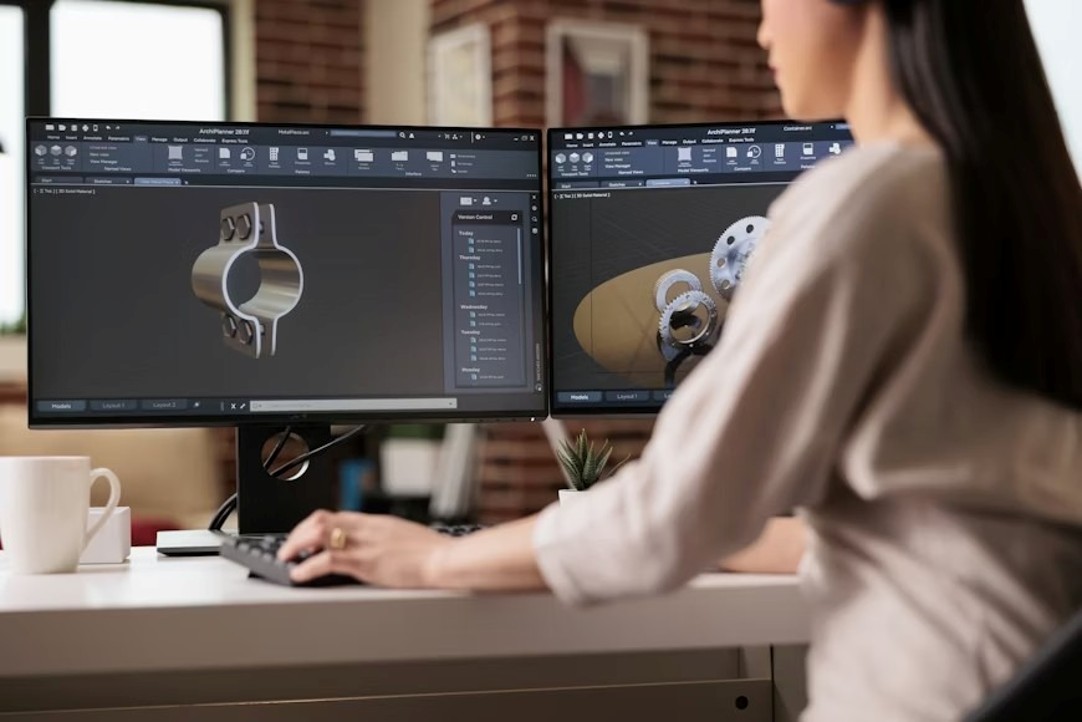
Prototyping serves as the bridge between concept and production, transforming ideas into tangible objects that reveal real-world constraints. Unlike a POC, which validates technical possibility, a prototype tests whether your design can actually be manufactured at scale using real materials and production processes.
For physical products, prototypes must answer critical questions that sketches and CAD models cannot: How does it feel in hand? Will the materials hold up under actual use? Can the parts be assembled efficiently? Are the tolerances achievable with available manufacturing methods?
The primary goal of prototyping isn't just to visualize what the product looks like—it's to validate that your design can transition from concept to repeatable, cost-effective production. This distinction is crucial and often overlooked by teams that rely on 3D printing or non-production materials.
Early-Stage vs. Production-Ready Prototypes: Understanding the Progression
Early-stage prototypes focus on form, fit, and basic function testing. These might use stand-in materials or simplified construction to quickly validate core design decisions, such as ergonomics, size, and basic mechanical operation. They're ideal for testing whether your product concept makes sense before investing in production-grade tooling.
Production-ready prototypes, however, are built using the actual materials and processes planned for manufacturing. These prototypes reveal the truth about your design—tolerance stack-ups, assembly challenges, material behaviors, and cost realities that never appear in CAD or 3D-printed models.
The progression from early to production-ready prototyping should be intentional. Start with simple mock-ups to validate core assumptions about form and function, but transition to production materials before making final design decisions. Waiting too long to test with real materials often leads to expensive redesigns when manufacturing constraints finally surface.
How to Build a Prototype That Actually Tests Your Assumptions
Effective prototyping starts with clarity about what assumptions you're testing. Are you validating ergonomics, testing mechanical durability, checking assembly sequences, or confirming that your chosen materials meet performance requirements?
Define these learning objectives before deciding what to include in your prototype. For example, if you're testing durability, you might build multiple units using different material options to compare real-world performance. If you're validating an assembly, you might focus on creating fixtures and testing the build sequence with production-intent parts.
The key is matching your prototype's construction to your current questions. Don't invest in expensive tooling before validating basic form and function, but don't rely on 3D prints when you need to test material properties or manufacturing feasibility.
Why Production-Material Prototypes Beat 3D Prints Every Time
While 3D printing may seem like a quick prototyping solution, it often creates false confidence. 3D printed prototypes can't accurately represent production materials, tolerances, or assembly constraints—leading to costly surprises during manufacturing.
A 3D-printed part might fit together perfectly with 0.1mm precision, but the same design fails when manufactured with injection-molding tolerances of ±0.5mm. The material properties are completely different—what flexes nicely in printed ABS might crack in production-grade polycarbonate.
At Rabbit Product Design, prototypes are built using actual production materials and methods wherever possible. This means CNC machining from the intended material, creating low-volume molded parts, or using production assembly techniques—even if it costs more upfront. The investment prevents the far greater waste of designing around capabilities that don't exist in real manufacturing.
MVP: The Minimum Product That Creates Maximum Learning

Unlike POCs and prototypes, an MVP is an actual working product that delivers real value to early users while providing the foundation for future development.
5 Essential Features Every MVP Must Include
While every product is unique, successful MVPs typically include five core elements: a clear value proposition that solves a specific problem, a streamlined user onboarding flow, core functionality that delivers on the main promise, basic error handling to prevent frustration, and a feedback mechanism to gather user insights.
Notice what's not on this list—comprehensive feature sets, perfect polish, or elaborate customization options. These can come later, informed by real user feedback. The key is to identify your product's "must-have" features versus "nice-to-have" additions.
Airbnb's MVP allowed people to list spaces and book them; it didn't include the review system, professional photography, or sophisticated search filters that are now central to the platform. Those were added after the core concept was validated with real users who demonstrated a willingness to rent spaces from strangers.
The Pebble smartwatch's MVP focused solely on delivering notifications to your wrist and basic time-telling—no app ecosystem, no fitness tracking, and no customizable watch faces. Those features came later after the team validated that people actually wanted smartwatch notifications enough to wear a device daily.
How to Define Your MVP Scope Without Endless Debates
To avoid scope creep and achieve consensus on your MVP, start by clearly articulating the one core problem you're solving and the simplest solution that addresses it.
Use the "one metric that matters" approach to focus everyone on a single measure of success—this helps filter feature requests against a common objective. For a communication app, this might be "daily active users"; for an e-commerce platform, it might be "completed purchases."
User stories and journey mapping can also help prioritize features by visualizing the critical path users must take to achieve their goals. Any feature that doesn't directly support this critical path is a candidate for the "future development" list.
Remember, an MVP is not the final product—it's the first version that lets you learn and iterate based on real-world use.
Why Most Teams Build Too Much Into Their "Minimum" Viable Product
The most common mistake in MVP development is misinterpreting the "minimum" part of the equation. Product teams often fall into the trap of feature creep, convincing themselves that users won't accept a product without certain features or polish.
This fear of negative feedback or market rejection leads to bloated MVPs that take too long to build, cost too much, and ironically, often miss the mark on what users actually want.
POC vs Prototype vs MVP: Comparison Table
Turn Your POC, Prototype, or MVP Into a Market-Ready Product With Rabbit Product Design
Understanding the differences among a proof of concept, a prototype, and an MVP is essential for making smart product development decisions. At Rabbit Product Design, we guide clients through each stage of this validation journey with a structured, end-to-end development process.
Whether you need to prove a technical concept is feasible, refine your product's form and function through prototyping, or build a production-ready MVP, our senior engineering team has the expertise to move your idea forward efficiently.
Our process covers everything from initial feasibility analysis and concept development through industrial design, engineering, and production-ready prototyping. We don't stop at validation—we take products all the way through manufacturing setup, branding, and launch planning.

Unlike firms that push licensing deals or leave you with a prototype and no clear path forward, Rabbit believes in building real businesses around real products.
This integrated approach means you work with one team from start to finish, avoiding the costly handoffs and miscommunications that derail so many product launches.
Ready to move beyond validation and bring your product to market? Contact Rabbit Product Design for a free consultation and discover how our proven process turns promising concepts into profitable products.
Start Your Product Journey Today→
Frequently Asked Questions (FAQs)
What is the main difference between a POC, a prototype, and an MVP?
A POC answers "Can we build it?" by testing technical feasibility. A prototype answers "How should it work?" by validating design and manufacturability. An MVP answers "Will people use it?" by testing real market demand with a functional product.
In what order should I develop a POC, prototype, and MVP?
The typical sequence is POC first to confirm technical viability, then a prototype to validate the design, and finally an MVP to test market demand. However, you may skip stages if certain risks are already addressed or combine approaches based on your product's specific uncertainties.
How much should I budget for each validation stage?
As a guideline, allocate roughly 5–10% of your total development budget to a PCC, 10–20% to prototyping, and 30–40% to your MVP. Adjust these percentages based on where your greatest risks lie—technical, design, or market.
When should I move from prototype to MVP?
You're ready to transition when user testing reveals consistent success patterns, feedback shifts from fundamental issues to minor refinements, and you have clear confidence in your core user experience. Diminishing returns from additional prototyping are a strong signal to proceed.
How can Rabbit Product Design help with my POC, prototype, or MVP?
Rabbit Product Design provides a complete product development process covering feasibility analysis, concept development, industrial design, engineering, production-ready prototyping, manufacturing setup, and launch planning. Our senior team guides you from early validation through commercialization under one roof.
*Disclaimer: This content is for educational purposes only and not financial, legal, or business advice. Figures vary by circumstance. Consult qualified professionals before making decisions. For personalized guidance, contact Rabbit Product Design.