
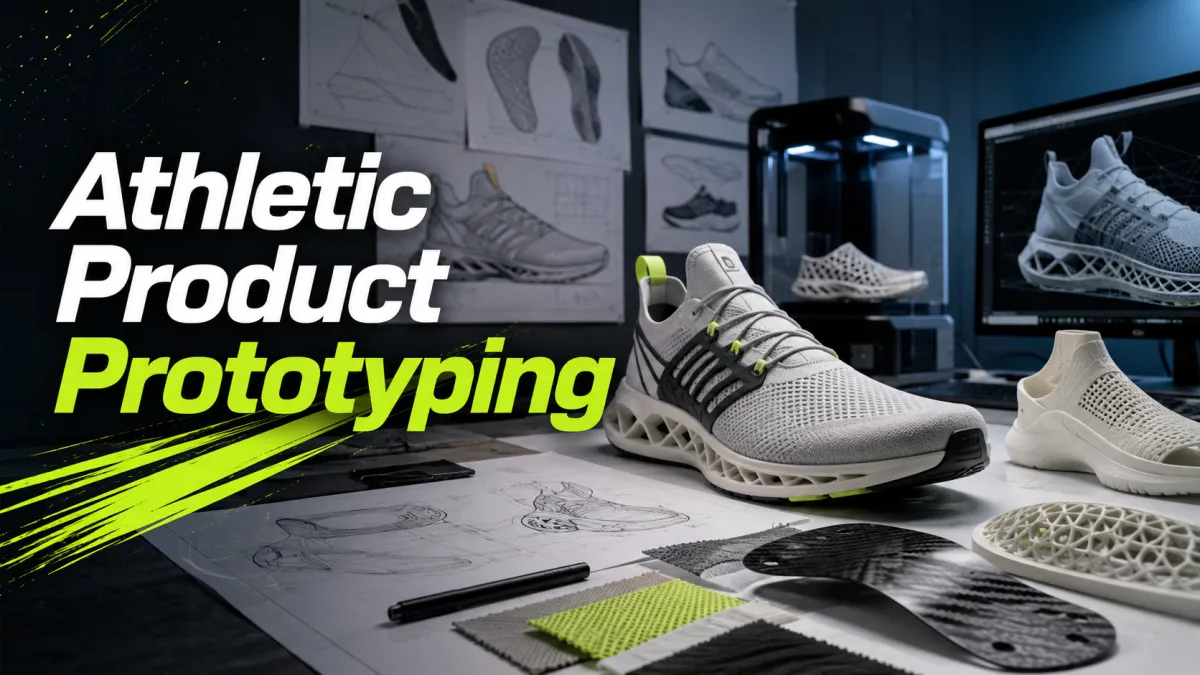
Athletic Product Prototyping Mistakes Costing You Time and Money
Athletic products face conditions typical consumer products never encounter — heavy sweat exposure, high impact forces, wet grip requirements, sport-specific stress patterns, and users who push products harder than any lab test protocol replicates. Prototyping mistakes in this category compound quickly: a design that seems fine in the office may fail in the first real training session. For inventors, entrepreneurs, and small business owners developing athletic products, recognizing common prototyping mistakes before making them is what separates products that build loyal athlete communities from products that get returned after the first serious workout.
Quick Answer
The most common athletic product prototyping mistakes are: testing with non-athletes or casual users who don’t stress the product realistically; designing sport-generic products instead of matching the specific sport’s requirements; ignoring sweat, moisture, and grip behavior under real athletic conditions; underestimating the durability requirements athletic use produces; poor fit strategy that doesn’t account for body variation across the target athlete population; and ignoring the weight and mobility trade-offs athletes evaluate. Each of these mistakes typically produces field failures, poor athlete reception, or product returns that appropriate Phase 2 prototype work would have prevented. A full-service product development firm structures Phase 2 athletic product prototype work to address these mistakes systematically.
Key Facts
- Athletic products face stress profiles typical consumer products don’t encounter — sweat, impact, grip in wet conditions, and sport-specific loads
- Athletes evaluate athletic products differently than casual users — more critically, based on direct comparison with existing gear
- Athletic product markets build reputations quickly through athlete-to-athlete recommendation and social channels
- Prototype testing with actual athletes under real training conditions reveals findings casual-user testing doesn’t produce
- Athletic products fit primarily in the soft goods vertical (bags, cases, wearables, sports gear, pet products) with hardware and consumer components as needed
Key Takeaways
- The single most common athletic product prototyping mistake is testing with users who don’t stress the product the way real athletes will
- Sport-specific design considerations produce products that fit their intended sport; sport-generic design produces products that don’t truly fit any sport well
- Sweat and moisture effects change how materials behave — grip surfaces, fasteners, and fabrics all perform differently when wet
- Athletic-use durability requirements typically exceed general consumer durability by significant margins
- Body variation across athletes requires deliberate fit strategy, not one-size assumptions
- Weight and mobility are performance dimensions athletes actively evaluate — not comfort considerations they’ll accept trade-offs on
Table of Contents
- Why Athletic Product Prototyping Is Different
- Mistake 1: Testing With Non-Athletes or Casual Users
- Mistake 2: Designing Sport-Generic Instead of Sport-Specific
- Mistake 3: Ignoring Sweat, Moisture, and Wet Grip Behavior
- Mistake 4: Underestimating Athletic-Use Durability Requirements
- Mistake 5: Poor Fit Strategy for Athletic Body Variation
- Mistake 6: Ignoring Weight and Mobility Trade-Offs
- How the Four-Phase Process Prevents Athletic Product Mistakes
- How Rabbit Product Design Handles Athletic Product Prototyping
Why Athletic Product Prototyping Is Different
Athletic products serve users in conditions that most consumer products never encounter. A running product gets soaked in sweat, pounded by impact for hours, exposed to weather, and pushed by users focused on performance rather than gentle handling. A weightlifting product gets loaded to failure repeatedly. A team sport product gets thrown, slid on, tackled, and dropped. These use profiles produce specific stresses on materials, construction, and design that generic consumer product prototyping doesn’t address.
The user population is also different. Athletes evaluate athletic products against their existing gear, against what teammates use, and against the specific requirements of their sport. They notice problems quickly because they use products under real stress constantly. They’re also connected to other athletes who share opinions about gear rapidly. This raises the reputational stakes of athletic product launches — successful products build reputations fast; failures get warned about fast.
This produces prototyping demands that consumer product prototyping doesn’t address well. Standard testing with casual users doesn’t stress the product like athletes will. Standard use assumptions don’t match athletic conditions. Standard durability requirements don’t match athletic-use expectations. Athletic product prototypes have to be designed and tested against athletic reality.
Mistake 1: Testing With Non-Athletes or Casual Users
The single most common athletic product prototyping mistake is testing prototypes with users who don’t use the product like real athletes will. Employees, friends, and family members trying the prototype for a few minutes don’t reveal what happens when a competitive athlete uses the product for hours under real training conditions.
Real athletes stress products in ways casual users don’t. Grip forces are higher during intense use. Sweat exposure is heavier. Motion patterns are more aggressive. Duration of use is longer. Repetition counts are higher. Products that seem fine to casual testers often reveal problems immediately when actual athletes evaluate them.
The correct approach recruits actual athletes from the target population and tests prototypes under real training or competitive conditions — not lab simulations. Athlete testing during Phase 2 reveals sport-specific problems that only surface under real use.
Mistake 2: Designing Sport-Generic Instead of Sport-Specific
The second common mistake is designing “athletic products” as if athletic use were a single category, rather than a diverse set of sport-specific requirements with substantial differences between sports.
How Sports Differ
A running product needs to handle repetitive impact, high sweat exposure, and long-duration use. A weightlifting product needs to handle static loads that may exceed body weight, brief high-intensity use, and grip requirements when hands are chalked. A cycling product needs to handle sustained aerodynamic positions, moisture from rain and sweat, and vibration from road contact. A contact sport product needs to handle sudden impact, tearing forces, and rapid direction changes. Designing for one sport doesn’t produce a product that works for another.
Sport-Generic Failure Patterns
Products marketed for general athletic use often underperform in each specific sport they claim to serve. Athletes who need equipment for their specific sport buy sport-specific gear from competitors who understand their sport. Products with sport-generic design typically compete only on price, not on performance — which limits market position.
Mistake 3: Ignoring Sweat, Moisture, and Wet Grip Behavior
The third common mistake is designing products for their dry, clean, room-temperature condition rather than for the wet, sweaty conditions athletic use actually produces.
How Moisture Changes Product Behavior
Grip surfaces that work when dry may become slippery when wet with sweat. Fabrics that feel comfortable in dry conditions may absorb sweat and become heavy, cold, or chafing. Fasteners that hold in dry conditions may corrode or loosen with repeated sweat exposure. Adhesives that bond in clean conditions may release when contaminated with skin oils and sweat. Materials that are dimensionally stable in dry conditions may swell or warp when saturated.
Testing Under Real Moisture Conditions
Effective athletic product prototype testing includes representative sweat exposure, wet-grip conditions, and repeated wet-dry cycling. Testing that only evaluates products in dry conditions typically misses failure modes that surface immediately in real athletic use. Wet-condition testing during Phase 2 catches problems that would surface in the first heavy training session.
Mistake 4: Underestimating Athletic-Use Durability Requirements
The fourth common mistake is applying consumer-product durability expectations to athletic products, which face significantly harder use.
The Durability Gap
A casual user might use a product a few times a week; a competitive athlete might use the same product every day, sometimes multiple sessions per day. Impact forces during athletic use often exceed forces during typical consumer use. Motion cycles accumulate faster. Weather exposure is often heavier. The result is that athletic products typically experience in months what consumer products experience in years.
Durability Testing Requirements
Athletic product durability testing has to reflect athletic use, not typical consumer use. Load cycles at athletic-representative forces, cumulative use hours at athletic-representative session lengths, weather cycling at athletic-representative exposure, and fatigue testing at athletic-representative cycle counts all matter. Products designed to typical consumer durability requirements often fail rapidly under athletic conditions.
Mistake 5: Poor Fit Strategy for Athletic Body Variation
The fifth common mistake is treating fit as a one-size-works-well assumption, rather than developing a deliberate fit strategy that addresses the body variation across the target athlete population.
Athletic Body Variation
Athletic populations vary substantially in body dimensions relevant to product fit. Different sports select for different body types. Male and female athletes have systematic differences in body proportions. Youth to adult populations show growth-related fit differences. Products with one-size-fits-most strategies typically fit only the population’s middle band well, disappointing the tails.
Fit Strategy Options
Effective fit strategies include multiple sizes covering the target population range, adjustable features that accommodate body variation within each size, sport-specific fit optimization that matches the postures the sport produces, and where appropriate, gender-specific fit that reflects real body differences. Products with deliberate fit strategy typically produce higher athlete satisfaction than products with generic sizing.
Mistake 6: Ignoring Weight and Mobility Trade-Offs
The sixth common mistake is treating product weight and mobility as comfort considerations that athletes will accept trade-offs on, rather than as performance dimensions athletes actively evaluate.
Why Weight Matters to Athletes
For endurance athletes, product weight adds to the load they carry throughout their session, affecting performance. For explosive-power athletes, weight affects speed and quickness. For sports that involve throwing or lifting equipment, weight is directly performance-relevant. Athletes are sensitive to weight in ways casual users typically aren’t.
Why Mobility Matters to Athletes
Products that restrict motion — through bulk, stiffness, or design constraints — affect athletic performance directly. Athletes evaluate whether products let them move naturally through their sport’s motion patterns. Products that restrict motion, even slightly, get rejected in favor of products that permit natural movement.
Trade-Off Discipline
Weight and mobility often trade off against other design goals like durability or protection. The correct approach makes these trade-offs deliberately, understanding the athlete’s performance priorities, rather than defaulting to whatever seems easiest. Products designed with explicit weight and mobility discipline typically outperform products that treat these as afterthoughts.
How the Four-Phase Process Prevents Athletic Product Mistakes
The four-phase product development process structures athletic product work so common mistakes get addressed systematically.
Phase 1 (Research & Ideation)
Phase 1 establishes the target sport, the specific athlete population, use conditions in that sport, competitive landscape, and unit economics. For athletic products, Phase 1 research should include understanding sport-specific stress profiles, athlete body variation, and how athletes evaluate products in the target category.
Phase 2 (Design & Prototype)
Phase 2 executes industrial design and mechanical design with sport-specific requirements established in Phase 1. Material selection reflects athletic-use conditions. Prototyping through CNC machining, soft tooling, and injection molding samples matches method to validation stage. Testing includes athlete testing with actual athletes under real training conditions, wet-condition testing, and athletic-representative durability testing.
Phase 3 (Sourcing & Manufacturing)
Phase 3 qualifies suppliers capable of producing athletic-appropriate materials, fabrics, hardware, and finishes. Supplier qualification should verify capability with the specific requirements athletic products impose. First-article inspection validates production parts against the athlete-validated design.
Phase 4 (Branding & Marketing)
Phase 4 launches the product through channels appropriate to the target sport — sport-specific retailers, athlete communities, team channels, sport-focused publications. Marketing that speaks to sport-specific benefits typically outperforms generic athletic marketing.
How Rabbit Product Design Handles Athletic Product Prototyping
Athletic product development requires coordinating industrial design, mechanical engineering, material selection for sport-specific conditions, fit strategy for athletic populations, and testing with actual athletes under real conditions — a multi-discipline challenge that first-time inventors often don’t have the experience to manage across separate vendors. Rabbit Product Design handles this integration under one roof. With 9 years in business, over 2,000 products developed, and senior engineers averaging 27 years of experience, the firm brings the coordination discipline that athletic product prototypes require.
Athletic products fit explicitly in the soft goods vertical, one of the firm’s five verticals — consumer products, soft goods (bags, cases, wearables, sports gear, pet products), hardware (brackets, hinges, latches, mounting systems, mechanical assemblies, fixtures, storage hardware), electronic products and IoT, and inventor projects. Athletic products may also involve hardware components (structural elements, mounting systems), consumer product design (aesthetic and ergonomic considerations), or, for connected athletic products, electronic components. Vertical experience across these categories shapes appropriate athletic product approach.
The Phase 2 discipline Rabbit Product Design brings to athletic product prototypes includes sport-specific design informed by understanding actual athletic requirements; material selection matched to sweat, impact, and durability conditions athletic use produces; fit strategy addressing body variation across the target athlete population; testing protocols including athlete testing with real athletes under real training conditions and wet-condition validation; and DFM review integrated throughout Phase 2 to prevent Phase 3 rework.
For inventors developing athletic products, understanding the specific sport and athlete population is Phase 1 work that shapes every subsequent decision. Senior engineers with athletic product experience know which materials survive sport-specific abuse, how to structure athlete testing to produce actionable feedback, and how to sequence prototype validation so weight, mobility, and durability trade-offs get validated deliberately.
Athletic Product Development Services Across Phases
- Phase 1: research on target sport, athlete population, sport-specific stress profiles, body variation, competitive landscape, unit economics
- Phase 2: industrial design and mechanical design with athletic-appropriate material selection; prototyping through CNC machining, soft tooling, injection molding samples, and soft goods prototyping; athlete testing and wet-condition validation
- Phase 3: supplier qualification for athletic-appropriate materials and construction, first-article inspection, production coordination
- Phase 4: packaging communicating sport-specific features, marketing suited to athletic product channels and communities
To begin a product development engagement for an athletic product, contact Rabbit Product Design.
Conclusion
The most common athletic product prototyping mistakes — testing with non-athletes, designing sport-generic instead of sport-specific, ignoring sweat and moisture behavior, underestimating durability requirements, poor fit strategy, and ignoring weight and mobility trade-offs — each carry specific cost signatures in the athletic products market. Each is preventable with disciplined Phase 2 work that addresses the specific sport, the specific athlete population, and the specific conditions the product will face. For inventors, entrepreneurs, and small business owners developing athletic products, recognizing these mistakes before making them saves what would otherwise be spent recovering from them in a market where athlete opinions travel quickly.
FAQ
What is the most common athletic product prototyping mistake?
Testing prototypes with users who don’t stress the product the way real athletes will. Employees, friends, and casual users don’t reveal what happens when a competitive athlete uses the product for hours under real training conditions. Real athletes produce higher grip forces, heavier sweat exposure, more aggressive motion patterns, and higher repetition counts than casual users. Recruiting actual athletes from the target population and testing under real training conditions catches problems that casual testing misses.
Why does sport-specific design matter for athletic products?
Different sports produce different stress profiles, motion patterns, moisture exposure, duration of use, and performance requirements. A product designed for running faces different demands than one designed for weightlifting or cycling or team sports. Sport-generic products typically underperform in each specific sport they claim to serve because they don’t match any sport’s specific requirements well. Sport-specific design produces products that fit their intended sport and compete on performance rather than only on price.
How does sweat affect athletic product design?
Sweat changes how many product elements behave. Grip surfaces can become slippery. Fabrics can absorb moisture and become heavy or chafing. Fasteners can corrode or loosen. Adhesives can release when contaminated. Materials can swell or warp under saturation. Effective athletic product prototype testing includes representative sweat exposure and wet-condition validation to catch failure modes that dry-condition testing would miss.
How much more durable do athletic products need to be than typical consumer products?
Athletic products typically face significantly higher use intensity than typical consumer products — more frequent use, higher impact forces, more motion cycles, and heavier weather exposure. Athletic products often experience in months what consumer products experience in years. Durability testing should reflect athletic-representative use conditions, not typical consumer use. The specific magnitude depends on the sport and target athlete population.
Who helps inventors develop athletic product prototypes end-to-end?
A full-service product development firm that handles industrial design, mechanical engineering, material selection for athletic conditions, soft goods design where applicable, athlete testing coordination, DFM review, and manufacturing coordination under one engagement. Firms integrating these disciplines cover athletic products, which fit explicitly within a dedicated soft goods product vertical.