
Do You Need a Patent to Sell a Product? Options, Pros & Cons
Key Takeaways
You can sell a product without a patent, but doing so leaves functional elements open to copying; patents and the right to sell are separate.
Patents give temporary legal exclusivity and the ability to enforce your rights, but their real-world value depends on market timing and relevance.
Patents are most useful when your product is technologically novel, easily copied, intended for licensing, or needed to attract investors.
Alternative strategies, such as trade secrets, branding, copyrights, and speed-to-market, can provide strong protection without the high costs and delays associated with patents.
At Rabbit Product Design, we guide entrepreneurs from idea to market through structured development, prototyping with real materials, manufacturing setup, and launch planning, focusing on building products, brands, and revenue rather than relying solely on patents.
The Truth About Selling Products Without a Patent
Let's clear up a common misconception: you are absolutely allowed to sell a product without having a patent. There is no legal requirement to secure patent protection before bringing a product to market. Thousands of successful products are sold daily without any patent protection.
However, selling without a patent means anyone can legally copy your product's functional elements. Your invention enters the public domain, and you cannot stop competitors from replicating your innovation. This reality means your decision should be strategic rather than automatic.
Know that patents and permission to sell are entirely different concepts. A patent grants you exclusive rights, but doesn't automatically clear you to sell; you could still infringe on someone else's patent even with your own patent in hand.
What a Patent Actually Gives You
Before deciding whether to pursue patent protection, it’s important to know what patents do and don’t provide. A patent is essentially a deal with the government: you publicly disclose how your invention works, and in return, you receive exclusive rights for a limited time.
Legal Exclusivity Rights
The main benefit of a patent is the legal right to stop others from making, using, selling, or importing your invention. This exclusivity creates a temporary legal monopoly, which can be highly valuable if your product gains traction. Without it, competitors can legally copy your functional features.
The Ability to Sue Infringers
Owning a patent gives you the right to take legal action against infringers. This alone can deter competitors, especially larger companies that want to avoid costly lawsuits. However, enforcement is your responsibility, not the government’s, and monitoring infringement and pursuing legal action can be expensive and time-consuming for smaller businesses.
Temporary Monopoly (20 Years for Utility Patents)
Utility patents last 20 years from the filing date, giving you a protected window to commercialize your invention and recover development costs. In fast-moving industries like consumer electronics or software, however, the real-world value of this term may be shorter. By the time a patent is granted, often 2–3 years after filing, the market may have already shifted.
When You Should Definitely Get a Patent
Patents aren’t always necessary, but in some situations they provide clear, strategic value. Knowing when they matter most can help you protect your intellectual property effectively.
Your Product Has Truly Novel Technology
If your product introduces genuinely new technology that significantly improves on existing solutions, a patent is especially valuable. Breakthrough inventions are exactly what patents are designed to protect, particularly when competitors would want to copy the innovation quickly.

Even without a patent, copyright provides long-lasting protection for creative elements.
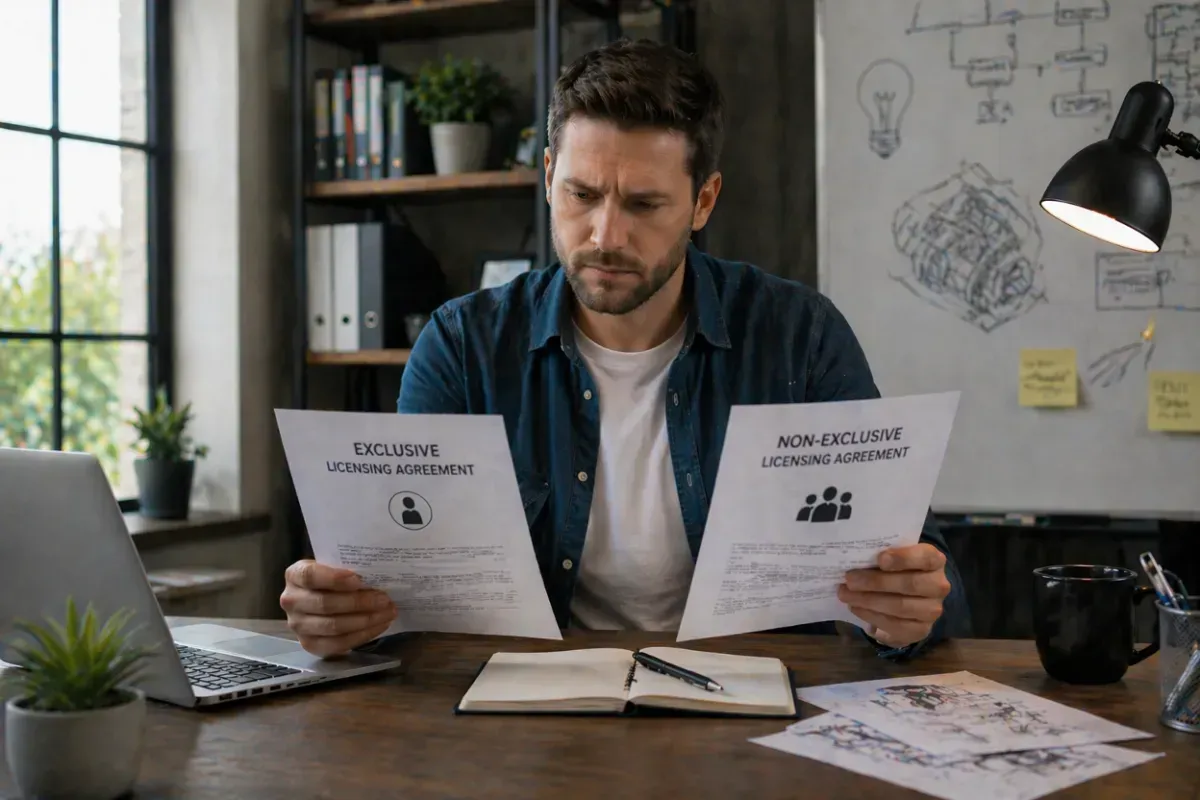
You Plan to License Your Invention
If licensing is part of your business model, patent protection is typically essential—though at Rabbit Product Design, we don't pursue licensing deals because we believe the only reliable path to making money with a product is to build it, manufacture it, and sell it as a business.
However, for those who choose this route despite its challenges, a patent becomes a transferable asset, enabling royalty-based income without manufacturing or distribution responsibilities.
Competitors Could Easily Copy Your Product
When your product can be easily reverse-engineered or examined, patents create important barriers to entry. This is especially relevant in industries where similar manufacturing capabilities are widely available, and copying is straightforward.
You Need to Attract Investors
Patents often increase investor confidence by validating innovation and reducing competitive risk. Many investors view a clear patent strategy as a sign of strong management and long-term business potential.
When You Don't Need a Patent
Patents provide legal protection, but they aren’t always the best choice. Knowing when to skip them can save significant resources and allow you to focus on other critical business priorities.
Your Product Has a Short Market Lifespan
Products with brief commercial life, such as seasonal items, fashion trends, or rapidly evolving technology, may not benefit from patents. Patents take years to issue, and by the time protection is granted, your product may already be replaced by the next iteration or become obsolete.
Your Business Model Relies on First-Mover Advantage
If your competitive edge comes from speed to market, rapid iteration, or staying ahead through execution, patenting may slow you down. Many tech companies thrive by continuously innovating rather than depending on legal protections to block competitors.
You Can't Afford Proper Patent Protection
Incomplete or low-quality patents can be worse than none, giving a false sense of security. Poorly drafted claims, insufficient searches, or narrow coverage may be easily challenged or designed around. It’s better to invest resources in product development, marketing, and scaling operations.
The Technology Is Changing Too Rapidly
In fast-evolving industries, patents can become outdated before they’re even granted. Shifting market needs or emerging technologies may render claims irrelevant, limiting the practical value of long-term protection.
The Real Costs of Patent Protection
Obtaining a patent involves more than filing paperwork; it requires expertise, time, and strategic planning. While DIY filings can cost a few hundred dollars, hiring a qualified patent attorney significantly increases your chances of robust protection.

Weigh the cost of patents against expected market advantage before investing.
Costs vary by the complexity of the invention and the type of patent. Utility patents typically range from $10,000 to $20,000, while design patents are simpler and often cost $1,500 to $3,000. International filings can increase costs due to translation and local legal fees.
Expenses include patent searches ($1,000–$3,000), drafting and filing provisional applications ($2,000–$6,000), drafting and filing non-provisional applications ($5,000–$15,000), responding to office actions ($1,000–$3,000), and final grant fees ($1,000–$3,000). Each step is crucial to avoid compromising patent validity.
Utility patents also require maintenance fees at 3.5, 7.5, and 11.5 years, ranging roughly from $400–$7,700 depending on entity size, while design patents do not require maintenance fees. Attorney services often make up the largest portion of costs, covering searches, filings, office action responses, and guidance throughout the patent process.
Alternative Protection Strategies
Patents are just one tool for protecting intellectual property. Many businesses combine multiple strategies specific to their product, market, and business model, often gaining substantial competitive advantages without relying solely on patents.
Trade Secret Protection
For innovations that can remain confidential, trade secrets provide potentially indefinite protection without public disclosure. This works for processes, formulas, and algorithms that are not evident in the final product. Famous examples include Coca-Cola’s formula and KFC’s secret recipe.
Strong Branding & Trademarks
Building a powerful brand through trademarks and marketing creates lasting advantages independent of patents. Trademark protection can last indefinitely with continued use. Companies like Apple command premium prices through brand strength, even when products are functionally similar to competitors.
Copyright for Product Materials
Copyright protects creative elements such as software code, packaging, manuals, and marketing materials, lasting the author’s life plus 70 years. While it doesn’t address functional aspects, registration enhances enforceability in the event of infringement.
Speed-to-Market Strategy
Rapid innovation and execution can provide natural advantages without legal exclusivity. First-mover advantage, strong customer relationships, and continuous improvement often outperform temporary patent monopolies. Companies like SpaceX succeed primarily through speed and operational excellence.
Layered Protection
The most effective approach often combines strategies. For example, a software company might use patents for core algorithms, trade secrets for internal processes, copyrights for code, and trademarks for branding, creating layered protection that’s difficult for competitors to bypass.
How to Make Your Final Decision
Choosing whether to pursue a patent should be strategic. Begin with a thorough patent search to confirm novelty and identify potential infringement risks. Professional searches are more reliable than DIY methods and can prevent wasted effort on weak or unprotectable patents.
Next, weigh the return on investment. Consider the costs of filing, maintenance, and enforcement versus the realistic advantage that patents provide. If costs outweigh expected benefits, or if patents mainly serve minor strategic purposes, they may not be worth pursuing.
Timing is also important. Utility patents can take 2–3 years to issue, often longer than your market window. Provisional applications provide temporary “patent pending” status, but applications become public 18 months after filing. For fast-moving or short-lifespan products, patents may offer limited practical value.
Assess market competitiveness. In industries with aggressive patent enforcement, patents may be necessary for core innovations. In other sectors, trade secrets, branding, speed-to-market, or continuous innovation can provide more substantial advantages without the high costs of patenting.
Finally, evaluate your budget realistically. Underfunded patent efforts often yield weak protection. Focusing on a single strong patent for your core innovation, or using alternative protection strategies, can deliver better results and conserve resources.
Patents are tools, not goals. Many successful businesses thrive without them by prioritizing execution, innovation, and strategic resource allocation. Carefully consider costs, timelines, and competitive forces to make the most practical decision for your business.
Build, Launch & Sell with Rabbit Product Design

Every product passes through evaluation, concept, design, prototyping, and launch planning.
At Rabbit Product Design, we specialize in taking products from idea to market through a structured, end-to-end development system. Our approach covers everything from initial product evaluation and feasibility checks to concept development, industrial design, engineering, production-ready prototyping, manufacturing setup, and launch planning. Every project moves through the same framework, ensuring manufacturability and commercial success.
We don’t sell ideas, pursue licensing deals, or treat patents as the default solution. Instead, we focus on creating real products that can be manufactured and sold. While patent research is part of our process, we view patents as tools, not goals. Filing prematurely can drain budgets and delay progress, so our priority is always to build, test, and launch products that generate revenue.
Our prototyping process avoids 3D printing for production—we use real production materials to validate manufacturability and ensure prototypes reflect real-world constraints. From supply chain setup to branding, packaging, and go-to-market preparation, we guide clients at every step toward a successful product launch.
With over 30 years of leadership and a team of engineers averaging 27 years of experience each, we've launched more than 2,000 products, generating over $1 billion in revenue. We know what it takes to bring ideas to life. Our patent research and product evaluation services help you avoid costly mistakes, identify open opportunities, and move faster to market.
At Rabbit, we help entrepreneurs, startups, and inventors focus on what truly matters: creating products, building brands, and generating sales, because real protection comes from market presence and execution, not just patents.
Turn Your Idea into Reality with Rabbit Product Design
Frequently Asked Questions (FAQs)
Can I sell my product while my patent application is pending?
Yes, you can sell your product while a patent application is pending and use “Patent Pending” markings. This offers no enforceable rights but may deter copying. Be mindful that public sales can affect international filing deadlines.
Will selling my product without a patent mean I can never get one?
In the U.S., selling starts a one-year clock to file a patent application. After that, rights are lost. Most countries offer no grace period, so public sales before filing usually eliminate patent protection outside the U.S.
How do I know if someone else already has a patent on my product idea?
You can search USPTO and Google Patents, review similar products, and consult a patent attorney. These searches identify existing patents that may affect your ability to sell, though they don’t guarantee freedom to operate without professional analysis.
What happens if I accidentally infringe on someone else’s patent?
Accidental infringement is still infringement. You may face injunctions, damages, and legal costs even without intent. Options include redesigning, licensing, or challenging the patent, but risks and costs increase significantly once your product is already selling.
How does Rabbit Product Design help with patents?
At Rabbit Product Design, we provide patent research to identify opportunities and risks, but our focus is on building real products. Instead of defaulting to filing patents, we guide clients to validate, prototype, manufacture, and launch, minimizing wasted time and expense.
*Disclaimer: This content is for educational purposes only and not financial, legal, or business advice. Figures vary by circumstance. Consult qualified professionals before making decisions. For personalized guidance, contact Rabbit Product Design.