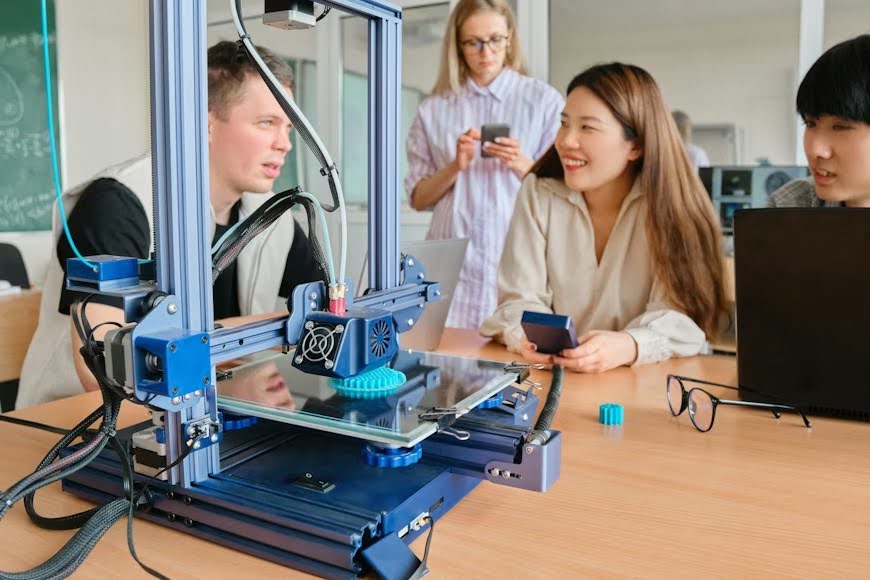
3D Printing vs CNC Machining for Prototyping: Cost, Pros & Cons
Key Takeaways
3D printing excels at quickly and cost-effectively creating complex geometries for prototypes, while Computer Numerical Control (CNC) machining offers superior precision and material strength.
Material selection heavily influences your choice of prototyping method: CNC machining excels with metals and hard plastics, while 3D printing offers greater flexibility with polymers.
For small batch production (1–10 units), 3D printing typically costs less than CNC machining, though this advantage diminishes as quantities increase.
At Rabbit Product Design, we avoid using 3D-printed prototypes for production validation because they can hide real manufacturing issues. We build with production materials so your prototype reflects actual manufacturing conditions.
3D Printing vs CNC Machining: Which Prototyping Method Wins?
The battle between additive and subtractive manufacturing isn't about finding an ultimate winner; it's about understanding which technology better serves your specific prototyping needs.
3D printing builds objects layer by layer from the ground up, while CNC machining carves your design from a solid block of material. This fundamental difference drives all other contrasts between the technologies.
Complex geometries with internal features thrive in 3D printing environments, where design freedom reigns supreme. CNC machining, meanwhile, delivers a superior surface finish and dimensional accuracy that 3D printing still struggles to match consistently. The decision ultimately comes down to your prototype's purpose.
For concept models and early design validation, where visual representation matters most, 3D printing delivers quick, cost-effective results. For functional testing that requires specific material properties and precise dimensions, CNC machining often provides the reliability needed to accurately assess performance.
Understanding 3D Printing Prototyping
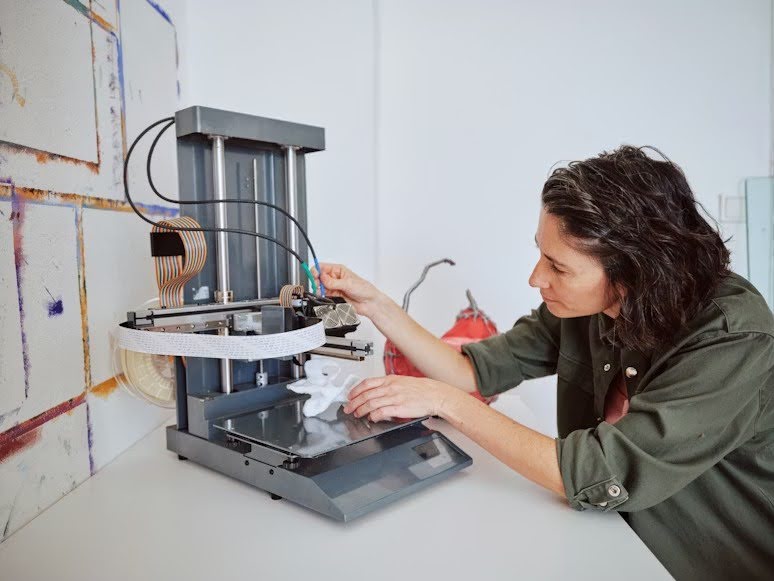
By using 3D printing for prototyping, designers can transform computer-aided design (CAD) into physical objects within hours, dramatically accelerating the innovation cycle.
The Additive Manufacturing Process Explained
3D printing uses additive manufacturing to build objects layer by layer from digital designs.
The process begins with a 3D model, typically created in CAD software, which is then "sliced" into hundreds or thousands of horizontal layers by specialized software. The printer interprets these layers as a series of cross-sectional areas and deposits or solidifies material accordingly.
Different 3D printing technologies build layers in different ways, each offering unique strengths in speed, precision, materials, and cost.
Fused Deposition Modeling (FDM) extrudes melted thermoplastic through a nozzle.
Stereolithography (SLA) uses a laser to cure liquid resin.
Selective Laser Sintering (SLS) fuses powder particles.
PolyJet sprays photopolymer droplets that are instantly cured by UV light.
The beauty of this layered approach is that it requires no additional effort or cost to produce complex internal structures. Unlike traditional manufacturing, where complexity drives up price, 3D printing makes intricate geometries just as economical as simple ones.
Material Options & Limitations
3D printing materials have expanded dramatically in recent years, but still face limitations compared to traditional manufacturing. Today's printers use various polymers, resins, and even metals, though metals remain significantly more expensive than polymer-based materials.
Standard thermoplastics like PLA and Acrylonitrile Butadiene Styrene (ABS) dominate the entry-level market, offering affordable prototyping options with modest mechanical properties. Engineering-grade materials such as nylon, TPU, polycarbonate, and PETG offer enhanced durability and functionality, bridging the gap between concept models and functional prototypes.
The key limitation remains mechanical properties. While 3D-printed parts can approximate the appearance of injection-molded or machined components, they typically exhibit anisotropic behavior, which shows different strengths in different directions due to their layered construction.
This can impact functional testing results and must be considered when evaluating prototype performance.
Typical Cost Breakdown for 3D Printed Prototypes
Understanding the cost structure of 3D printing helps make informed prototyping decisions. While entry-level FDM machines start around $200, professional systems capable of producing high-quality prototypes range from $5,000 to $10,000, depending on capabilities.
For most businesses, outsourcing to service providers eliminates capital expenditure concerns while providing access to industrial-grade equipment.
Pros & Cons of 3D Printed Prototypes
3D printing excels when rapid iteration trumps perfect finish quality. The ability to design in the morning, print in the afternoon, and test by evening creates a development velocity unmatched by traditional methods.
However, 3D printing has significant limitations. Material selection remains restricted compared to production-grade plastics, and layer lines compromise both surface finish and structural integrity. Parts exhibit anisotropic properties (stronger along build layers but weaker between them), creating directional weaknesses that don't exist in injection-molded components.
Additionally, build volume constraints limit part size, while dimensional accuracy typically falls short of precision manufacturing tolerances. These factors make 3D printed prototypes unreliable for validating production performance.
CNC Machining: The Precision Powerhouse
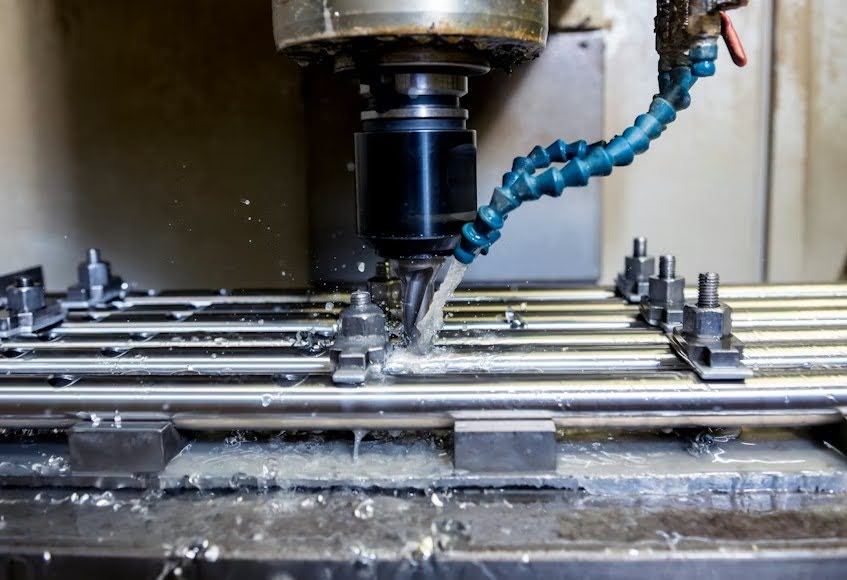
When precision matters most, CNC machining remains the gold standard for prototype production.
Subtractive Manufacturing Fundamentals
CNC machining removes material from a solid block (a blank or workpiece) until the desired shape is achieved.
Computer-controlled cutting tools, including end mills, drills, and lathes, remove material with extreme precision, following toolpaths generated from CAD models using CAM software. This process mirrors traditional machining methods but replaces human operators with computer control, enabling remarkable repeatability and precision.
For functional prototypes requiring real-world performance testing, CNC machining produces parts with mechanical properties virtually identical to those of production components. This predictability is crucial when validating designs that will transition to injection molding or other mass-production methods.
Material Compatibility & Performance
The material versatility of CNC machining is perhaps its greatest advantage over 3D printing. Nearly any solid material that can be cut can be machined: aluminum, steel, titanium, copper, brass, various plastics (acrylic, Delrin, ABS, polycarbonate, PEEK), composites, wood, and even foams.
This extensive compatibility enables prototypes that precisely match production material properties, critical for functional testing where material behavior directly impacts performance.
Cost Factors in CNC Prototyping
CNC machining costs are driven by several key factors: programming time, machine setup, machining time, material costs, and finishing operations.
Programming complexity scales with geometric complexity, as CAM programmers must determine optimal cutting strategies, tool selections, and machining parameters. Unlike 3D printing, where complexity rarely affects cost, intricate CNC parts require more sophisticated programming and potentially multiple setups, driving costs higher.
Material selection significantly impacts both cost and machining time. While aluminum can be machined relatively quickly and economically, stainless steel may require 3–5 times longer machining cycles and specialized cutting tools that cost significantly more.
Pros & Cons of CNC Prototyping
CNC machining excels at creating functional prototypes that must withstand mechanical stress or undergo environmental testing.
The exceptional dimensional accuracy (typically ±0.001" or ±0.025mm) ensures parts fit precisely with other components, while the wide material selection enables prototypes that behave identically to production parts. This performance predictability provides confidence that test results will translate directly to production, potentially saving costly redesigns later in development.
The primary limitations of CNC machining revolve around geometric constraints and economic factors. Internal features require direct tool access, making certain designs impossible or prohibitively expensive. Complex organic shapes that 3D printing handles with ease require multiple setups or specialized fixtures in CNC production.
For one-off prototypes with complex geometry, 3D printing often provides a more economical path. As production quantities increase, CNC machining's efficiency typically reaches a crossover point at which it becomes more cost-effective.
3D Printing vs CNC Machining: Side-by-Side Comparison
Choose the Right Prototyping Method With Rabbit Product Design
At Rabbit Product Design, we build prototypes using production materials and real-world manufacturing processes; not 3D prints that look good on a shelf but fall apart when transitioning to production.
We've seen too many inventors pour money into 3D-printed prototypes that mask critical manufacturability issues, only to face costly redesigns later. Our prototypes are built to reflect the actual constraints of tooling, materials, and mass production from day one.
Our structured product development process covers feasibility, concept development, industrial design, engineering, production-ready prototyping, manufacturing setup, branding, and launch planning.
Every prototype we deliver is designed for manufacturing, so you're not just testing a concept; you're validating a product that can be manufactured and sold. With senior-level engineers averaging 27+ years of experience and over 2,000 products launched, we help inventors, startups, and corporations move from idea to market without the guesswork.
Frequently Asked Questions (FAQs)
Is 3D printing or CNC machining better for prototyping?
It depends on your prototype's purpose. 3D printing is better for early-stage concept models, rapid design iterations, and complex geometries where cost and speed are priorities.
CNC machining is the preferred choice for functional prototypes that require precise tolerances, realistic material properties, and surfaces that closely match production parts. Many successful development projects use both 3D printing for initial exploration and CNC machining for final validation before manufacturing.
What are the main limitations of 3D printing for prototypes?
The biggest limitations are material properties, surface finish, and dimensional accuracy. 3D printed parts exhibit anisotropic behavior, meaning they have different strengths in different directions due to their layered construction.
Layer lines affect surface quality, and tolerances are typically looser than those for CNC machining. Additionally, many production-grade materials, such as tool steel, Delrin, PTFE, and certified medical or aerospace plastics, cannot be effectively 3D printed.
Can I use a 3D printed prototype to validate my design for manufacturing?
A 3D printed prototype is useful for checking form, fit, and basic ergonomics, but it should not be relied on to validate manufacturability. The materials, mechanical behavior, and construction methods differ significantly from those used in injection molding, CNC machining, and other production processes.
Designs that work well as 3D prints often encounter significant challenges when transitioning to production, including issues with wall thickness, draft angle requirements, and material performance gaps.
How does Rabbit Product Design approach prototyping differently?
Rabbit Product Design builds prototypes using production materials and processes rather than relying on 3D printing. We believe that 3D-printed prototypes create false confidence by concealing manufacturability issues that only surface during the transition to production.
Our structured process covers feasibility through launch planning, with every prototype designed for low-cost manufacturing from the start. This approach ensures that what you test is what you can actually produce, sell, and scale as a business.
*Disclaimer: This content is for educational purposes only and not financial, legal, or business advice. Figures vary by circumstance. Consult qualified professionals before making decisions. For personalized guidance,contact Rabbit Product Design.