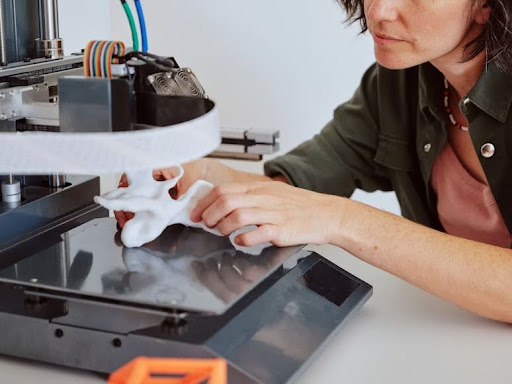
How Much Does It Cost to Prototype a Product: Pricing, Examples & Options
Key Takeaways
Prototype costs range dramatically from $100 for basic concept models to $50,000+ for production-ready prototypes, depending on complexity and materials.
The five main prototype types (concept, virtual, proof-of-concept, functional, and production-ready) each serve different purposes in the product development journey.
DIY prototyping can save money initially, but it often leads to higher costs later due to design flaws and revisions.
Working with a professional prototyping service like Rabbit Product Design can help balance quality and time management for better market-ready products.
How Much Does It Cost to Prototype a Product
Prototyping costs vary widely depending on how polished and functional you need the model to be.
Early options like concept models and virtual designs are the most affordable, usually between $100 and $2,000, and help you test ideas before spending on materials. Proof-of-concept models cost $100 to $3,000 and focus on demonstrating whether the core mechanism works.
More advanced prototypes come with higher price tags. Functional versions typically range from $1,000 to $10,000, while production-ready prototypes using near-final materials and processes can range from $5,000 to more than $50,000.
In this blog post, we'll break down prototype costs by type and material, and discuss whether it's better to build them yourself or hire professionals.
The 5 Types of Prototypes and Their Price Tags
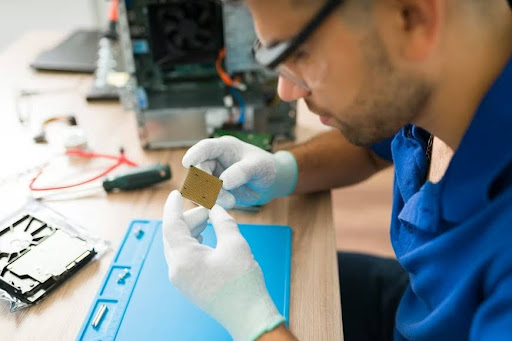
Understanding the different types of prototypes and their associated costs helps you plan your development journey more effectively.
1. Concept Prototypes ($100–$1,000)
Concept prototypes represent the earliest, most basic physical manifestation of your idea. These simple models focus on form, size, and basic ergonomics rather than functionality or aesthetics.
Often made from inexpensive materials such as foam, cardboard, clay, or basic 3D prints, they allow you to evaluate and demonstrate general product concepts. These prototypes typically cost between $100 and $1,000, depending on size and complexity.
2. Virtual Prototypes ($200–$2,000)
Virtual prototypes are digital representations of your product created using Computer-Aided Design (CAD) software. These digital models allow you to visualize and test product concepts before investing in physical materials.
The cost typically ranges from $200–$2,000 depending on complexity, with the main expense being the designer's time rather than materials. The benefit of virtual prototyping is the ability to make unlimited revisions without additional material costs.
You can test various design elements, simulate performance, and create rendered visuals for preliminary marketing or investor presentations. Many product developers consider this step essential before moving to more expensive physical prototypes.
3. Proof-of-Concept Models ($100–$3,000)
Proof-of-concept prototypes focus on demonstrating that your product's core functionality works as intended. These models aren't concerned with aesthetics or final materials; instead, they aim to validate that the underlying technology or mechanism performs as expected.
Costs typically range from $100 to $3,000, depending on the complexity of the functionality being tested. These prototypes often use off-the-shelf components, basic circuitry, or simplified mechanisms to prove the concept works before investing in custom parts.
For electronic products, this might involve breadboard circuits and basic programming, while mechanical products might use simplified mechanisms made from readily available materials.
4. Functional Prototypes ($1,000–$10,000)
Functional prototypes represent a significant step up in both quality and investment. These models incorporate both the core functionality and begin to address the product's form, materials, and user experience.
At this stage, you're creating a prototype that functions like the final product, even if it doesn't look identical or use the same production methods.
Costs typically range from $1,000–$10,000 depending on complexity, with electronic products and those with multiple components landing at the higher end of this range.
The investment increases because you're likely using higher-quality materials, custom-designed parts, and more sophisticated manufacturing methods, such as professional 3D printing, CNC machining, or vacuum casting.
5. Production-Ready Prototypes ($5,000–$50,000+)
Production-ready prototypes represent the final stage before mass manufacturing. These high-fidelity models use the same or very similar materials, finishes, and manufacturing processes as the intended final product.
They serve as the blueprint for production, allowing you to test not just functionality but also manufacturing feasibility and quality standards. The investment typically ranges from $5,000 to $50,000+, with complex electronic devices, medical equipment, and multi-component products reaching the higher end of this spectrum.
Prototyping Cost By Material With Examples
Paper & Cardboard ($200–$2,000)
Paper and cardboard are the most cost-effective options for producing a physical version of your idea. They work best for testing shape, size, and basic layout before investing in more advanced solutions. Most paper prototypes take one to two weeks to put together.
Example: If you're designing a new packaging box for a subscription service, you can use cardboard to cut and fold several versions, testing how the lid closes, how items fit inside, and how it looks on a shelf. This costs a few hundred dollars and helps you lock down dimensions before moving to printed packaging samples.
3D-Printed Plastic ($100–$5,000)
3D printing with plastic filaments like ABS or PLA is one of the most widely available prototyping methods. Pricing depends on print size, level of detail, filament type, and whether post-processing, such as sanding or polishing, is required. Most prints take one to four weeks.
However, while it can be useful for early visualization, 3D-printed prototypes often create false confidence and hide critical manufacturability issues. At Rabbit Product Design, we build prototypes using production-grade materials because what prints successfully may fail completely in actual manufacturing. If you choose 3D printing for early concepts, plan to rebuild with production materials before finalizing your design.
Example: If you're creating a new phone stand, you can print several versions to test the angle, grip, and stability. A small, simple print might cost under $100, but as you refine the design with textured surfaces and tighter tolerances, costs can climb to $1,000 or more across multiple iterations.
Machined Metal ($2,000–$25,000)
CNC machining is used when a prototype needs metal parts. Costs depend on the type of machining: 3-axis runs about $80 per hour, while 5-axis is closer to $200 per hour. Material costs are separate, with 6061 aluminum at approximately $25 per standard sheet and 304 stainless steel at approximately $90 per standard sheet. Most machined prototypes take two to six weeks.
Example: If you're developing a stainless steel water bottle with a custom threaded cap, CNC machining is used to produce a working sample. The threading, curved body, and polished finish require multiple machining steps, bringing the total cost per finished prototype to approximately $4,000 to $7,000.
Electronics With Custom PCB ($10,000–$50,000)
Electronics prototypes are the most expensive because they require custom circuit board design, firmware programming, enclosure fabrication, and often connectivity features such as Bluetooth or Wi-Fi. Even simple devices fall in this range, and timelines run from 4 to 12 weeks.
Example: If you're building a small kitchen timer with a digital display and alarm, you'll need a custom PCB, firmware to run the countdown logic, and a plastic housing. Despite being a simple product, the combined engineering and fabrication costs can range from $12,000 to $18,000 before the design is production-ready.
These numbers provide a starting point, but your actual costs will depend on the complexity of your design, the number of revisions, and the vendor you choose to build it.
DIY vs. Professional Prototyping: Which Option Is Better?
Many entrepreneurs consider the DIY route to save money, especially in the early stages. While this approach can reduce immediate costs, it's important to understand the trade-offs between DIY and professional prototyping.
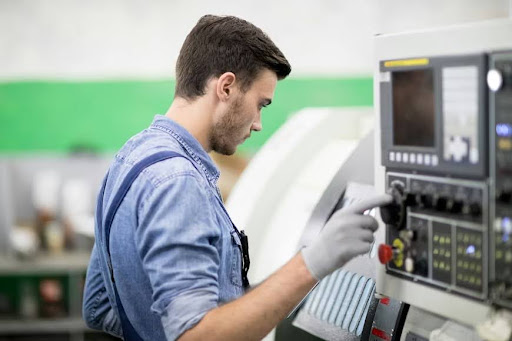
Many entrepreneurs try DIY prototyping to save money, but it’s important to weigh the trade-offs against hiring professionals.
When DIY Makes Financial Sense
DIY prototyping makes the most financial sense for early concept models, simple products, and founders with relevant technical skills. If you have experience with 3D modeling, basic electronics, or fabrication, creating initial prototypes yourself can save thousands while still producing useful results.
This approach works best when you're validating basic concepts, testing simple mechanics, or creating visual models for preliminary feedback before investing in professional services.
The Hidden Costs of DIY Approaches
While DIY prototyping appears cost-effective up front, it often leads to hidden expenses that can exceed the cost of professional services over the long term. The highest hidden cost arises from design flaws that go undetected without expert review, potentially leading to manufacturing issues that cost thousands to correct.
Another critical hidden cost comes from building prototypes with methods that don't translate to manufacturing. DIY approaches often rely heavily on 3D printing, which may work for prototypes but creates significant challenges when transitioning to production tooling and molding.
Limitations in the quality of DIY prototypes can also lead to misleading user feedback or investor impressions. A hastily executed prototype might receive negative feedback for its presentation rather than its core concept, potentially killing viable ideas before they're properly developed.
Professional Services: What You're Really Paying For
Professional prototyping services may seem expensive until you understand the comprehensive value they provide. Beyond creating physical models, these specialists bring decades of collective experience to help avoid costly missteps.
They maintain relationships with manufacturers and material suppliers that can streamline the transition from prototype to production. Their knowledge of regulatory requirements, material properties, and manufacturing constraints helps ensure that what looks good in prototype form will also be commercially viable.
Working with professional services also provides scalability advantages. As your prototype advances toward production, these partners can help facilitate introductions to appropriate manufacturers, assist with material sourcing, and provide guidance on scaling challenges.
This ecosystem of support extends far beyond the physical prototype itself and can be instrumental in successful product launches.
At Rabbit Product Design, we go further by refusing to use 3D printing as a production pathway. We build prototypes with the same materials and processes that will be used in manufacturing, so you see real-world constraints from the start, not just after investing thousands in an unbuildable design.
Turn Your Prototype Investment into a Real Product with Rabbit Product Design
At Rabbit Product Design, our structured product development process covers every stage of production: from feasibility analysis and concept development through production-ready prototyping, manufacturing setup, branding, and launch planning.
Unlike firms that rely on 3D printing and then transition to manufacturing, we use production materials and methods from the outset. This approach eliminates costly surprises and ensures your prototype accurately reflects what can actually be manufactured at scale.

Led by Adam Tavin with over 27 years of experience, our senior engineering team has developed 2,000+ products across consumer, medical, and industrial markets.
Whether you're a first-time inventor or an established company, we give you a clear path from idea to market, no licensing gimmicks, no false promises. Just a proven system designed to get your product built, manufactured, and sold.
Schedule a free consultation today to learn the cost of your prototype.
Frequently Asked Questions (FAQs)
How much does it cost to prototype a product?
Prototype costs typically range from $100 for simple concept models to over $50,000 for complex, production-ready prototypes. The final price depends on factors such as product complexity, materials, the number of components, electronic requirements, and whether you use DIY methods or professional services.
Is DIY prototyping worth it to save money?
DIY prototyping can make sense for early-stage concept models or if you have relevant technical skills. However, hidden costs, including undetected design flaws, additional iterations, time spent learning new skills, and delayed market entry, often exceed the savings.
A hybrid approach that uses DIY for initial concepts and professional services for functional, production-ready prototypes is typically the most cost-effective strategy.
What's the difference between a prototype and a minimum viable product (MVP)?
A prototype is a pre-production model used internally to test and validate design, functionality, and manufacturability. An MVP is a simplified but market-ready version of the product released to real customers to gather feedback and validate demand.
Prototypes typically precede MVPs in the development process, and production-ready prototypes often transition directly into initial manufacturing runs for the MVP.
How is Rabbit Product Design's prototyping approach different from other firms?
Rabbit Product Design runs a complete, structured development process, from feasibility and concept development through industrial design, engineering, prototyping, manufacturing setup, branding, and launch planning.
Unlike firms that rely heavily on 3D printing, Rabbit builds prototypes with production-grade materials to ensure the prototypes can be manufactured at scale. The firm focuses exclusively on helping clients build, manufacture, and sell real products rather than pursuing patents or licensing deals.
*Disclaimer: This content is for educational purposes only and not financial, legal, or business advice. Figures vary by circumstance. Consult qualified professionals before making decisions. For personalized guidance, contact Rabbit Product Design.